
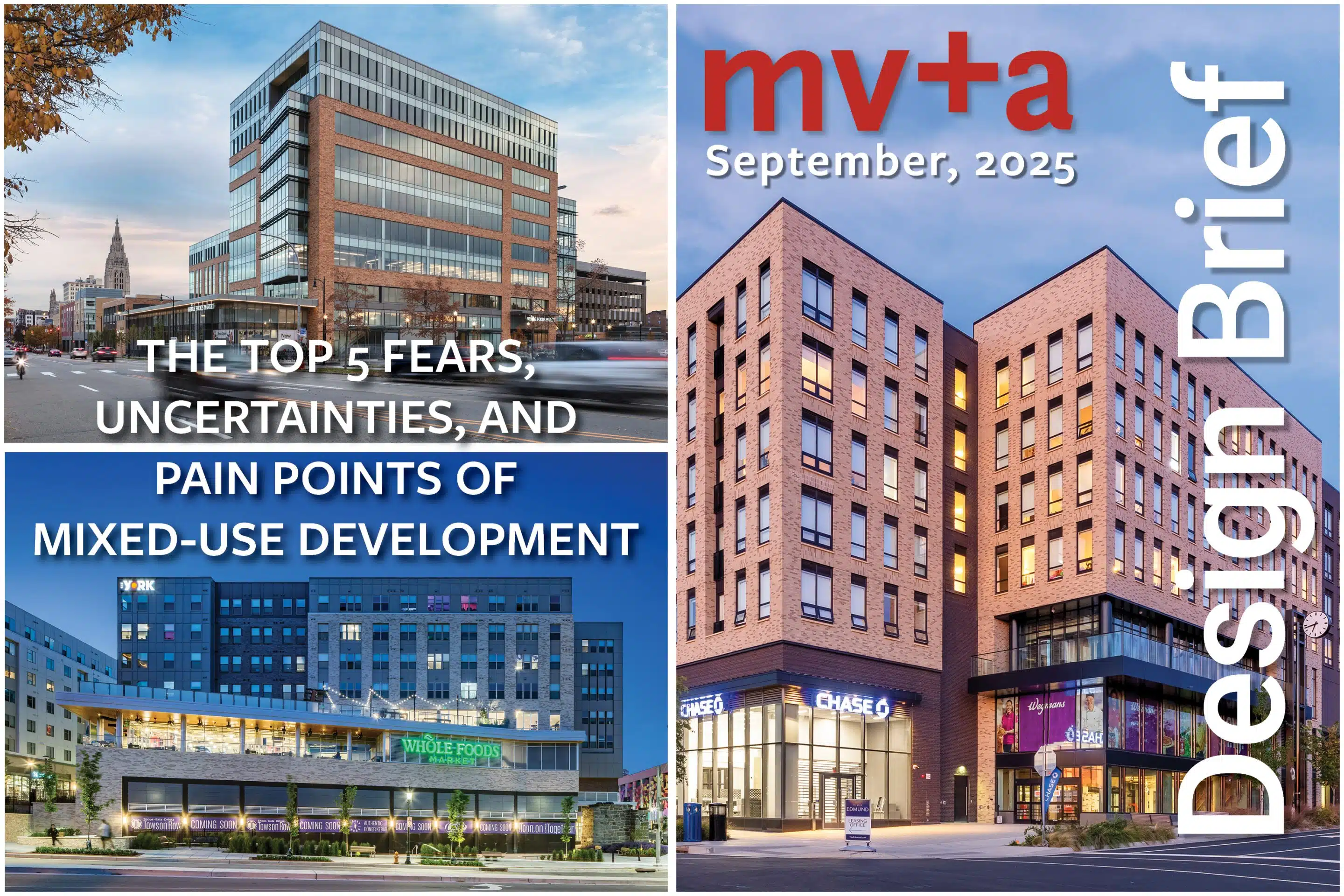
MIXED-USE MATTERS | The Good, The Bad, and the Onerous
Mixed-use development has long been celebrated as a cornerstone of vibrant, walkable communities. By integrating residential, retail, office, and civic uses, these projects promise energy around the clock, stronger placemaking, and long-term resiliency for neighborhoods. In the DC | DMV metropolitan region—where commercial corridors are evolving and office vacancies remain high—mixed-use offers a compelling model for adaptive reuse, community revitalization, and urban density without sprawl.
Yet for developers weighing mixed-use against single-use projects (predominantly residential, or less often commercial office), the decision is far from simple. Despite policy support and market enthusiasm, mixed-use carries unique risks. Financing, entitlement, construction, leasing, and operations often become more complex when uses are combined. For some, these challenges outweigh potential rewards, leading to the continued preference for single-use projects.
This Design Brief aims to foster a candid dialogue around those barriers: the pain points most frequently cited by developers, the failures that too often undermine mixed-use, and the opportunities for innovation that may help shift the equation.
DEVELOPMENT PAIN POINTS
1 | Entitlement Uncertainty
For most developers, entitlement is already one of the most time-consuming and costly phases of any project. In mixed-use, the uncertainty compounds:
-
Time + Cost Risk: Entitlements can stretch for years, with unpredictable costs and shifting requirements.
-
Overdesign for Uncertain Futures: Projects are often forced into excessive detail at early phases, only to face re-entitlement when programs inevitably change. With the uncertainty of the retail environment, there is a higher potential for program changes that could lead to re-entitlement efforts.
-
Political and Community Pushback: Mixed-use projects may draw sharper scrutiny from neighbors and elected officials, particularly around density, traffic, and retail viability, and the type or specific retail users involved in the project.
-
Lack of Flexibility: The rigidity of entitlements can discourage innovation, forcing developers into compromises that weaken long-term performance.
2 | Financing and Market Complexity
The financing landscape for mixed-use remains a stubborn obstacle:
-
Dual or Separate Financing: Retail and residential often require different financing streams, sometimes resulting in dual ownership or complicated deal structures.
-
Lender Risk Perception: Lenders are wary of ROI projections that hinge on volatile retail markets. Rent control, absorption risk, or fears of long-term vacancies amplify hesitation.
-
Construction Cost Variability: Rising interest rates, fluctuating material prices, and long lead times on components expose developers to outsized risk.
-
Exit + Liquidity Challenges: Investors and REITs often prefer “pure play” assets. Mixed-use projects can be harder to divest or sell piecemeal, leaving developers with inflexible portfolios.
3 | Design and Construction Coordination
Integrating multiple uses within a single structure magnifies cost and coordination challenges:
-
Podium and Systems Complexity: Residential uses stacked over retail require robust podium structures and specialized MEP systems. These add significant cost compared to single-use, slab-on-grade residential construction.
-
Phasing and Sequencing: Mixed-use projects demand careful coordination of construction sequencing, particularly where infrastructure and utilities must be relocated without impeding building erection.
-
Integrated Delivery Models: Increasingly, success depends less on individual technical solutions and more on integrated project delivery. Pairing the architect/engineer and general contractor early allows constructability, phasing, and cost implications to be tested from the outset. While MV+A has not yet pursued contractual Design-Build arrangements, our experience collaborating closely with construction partners has pointed to the benefits of this approach.
4 | Tenant Mix and Leasing Risk
Retail is both the promise and the Achilles’ heel of many mixed-use projects:
-
Anchor Tenant Uncertainty: Securing a strong anchor can make or break the viability of retail, but these deals are increasingly elusive.
-
Vacancy & Turnover: Retail turnover and evolving consumer trends leave developers exposed to prolonged vacancies.
-
Right-Sizing Retail: Too much or poorly configured retail space is a frequent mistake. Oversized footprints, shallow depths, or poor visibility undermine leasing.
-
Absorption Risk: Misreading demand for both residential and retail leads to overbuilding or slow lease-up.
5 | Operational Complexity
Even after ribbon-cutting, mixed-use poses ongoing challenges:
-
Property Management Demands: Managing across asset classes requires expertise in retail leasing, residential management, and shared services.
-
Shared Space Conflicts: Parking, lobbies, trash, and loading zones must be coordinated among diverse user groups, often leading to friction.
-
Staffing & Security: Mixed-use sites demand more intensive staffing and oversight compared to single-use properties.
-
Regulatory Flux: Environmental regulations, zoning amendments, and fee structures may shift mid-project, straining operations.
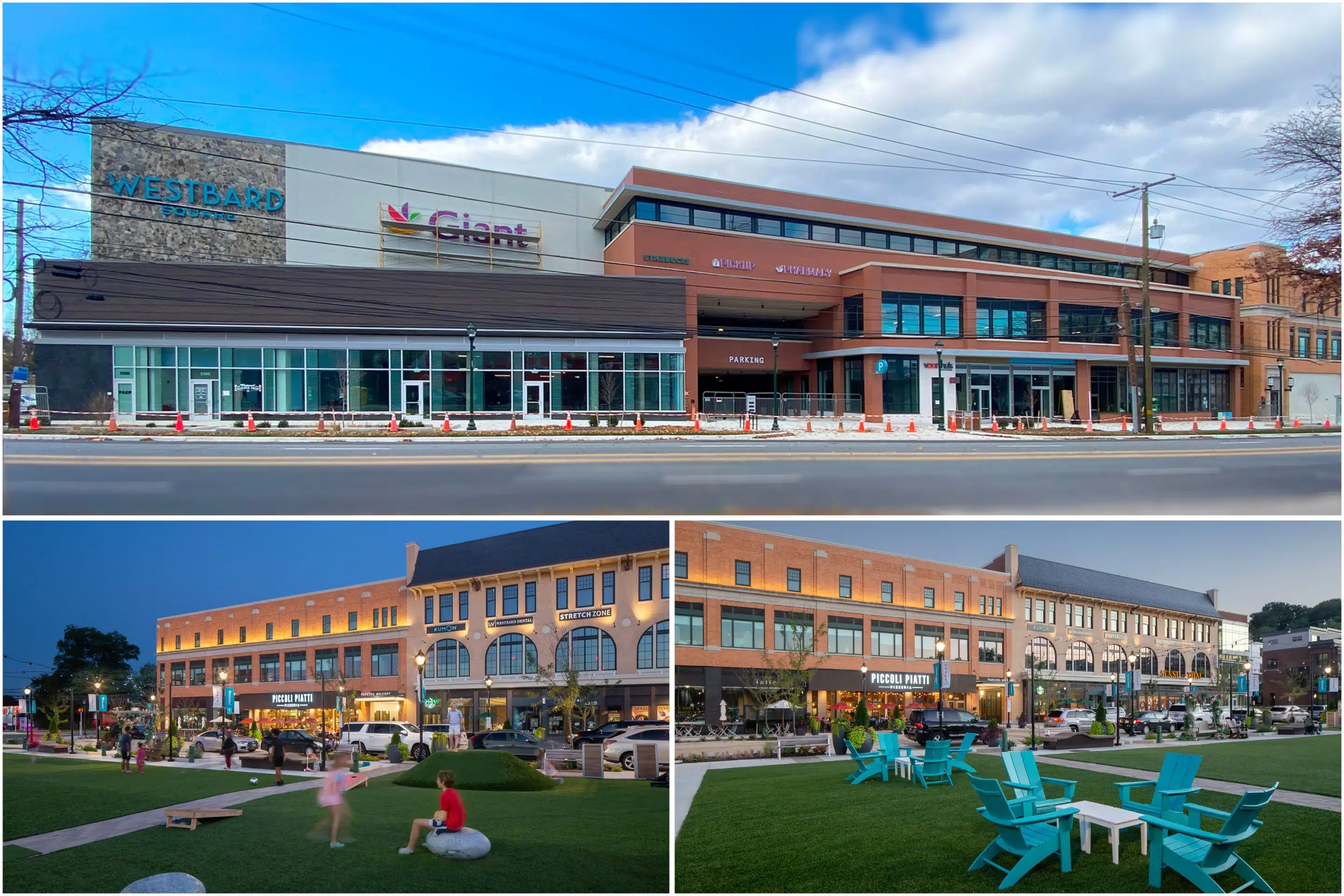 Despite a very complex first phase involving select demolition, noteworthy infrastructure improvements, and accommodations for existing operational retail tenants, the purely mixed-use phase of our Westbard Square project for Regency Centers necessarily preceded and enabled subsequent residential development phases. After less than a year, the first phase is fully leased.
Why Mixed-Use Still Matters
Despite the pain points, mixed-use continues to be one of the most critical tools for building resilient, inclusive communities. Particularly in the DMV:
-
Commercial Obsolescence: Office vacancies create opportunities for adaptive reuse into housing with active ground floors.
-
Walkable Urbanism: Mixed-use delivers the density and amenity mix necessary for 15-minute communities.
-
Transit-Oriented Development: WMATA and BRT investments are most successful when paired with diverse, mixed-use activity.
-
Market Differentiation: Well-executed mixed-use projects command premiums for housing, attract diverse tenant bases, and deliver long-term value to investors and municipalities.
Looking Forward: Opportunities for Innovation
The path forward is not about dismissing developer concerns, but about addressing them with design, policy, and financial creativity:
-
Streamlined Entitlements: By-right zoning, multi-staged entitlement processes, digital permitting platforms, and coordinated review processes can reduce entitlement risk.
-
Innovative Financing Tools: Blended capital stacks, state-backed guarantees, and retail-support funds can de-risk mixed-use.
-
Design Efficiencies: Flexible retail shells, and integrated building systems can reduce cost premiums.
-
New Tenanting Models: Curated local retail, experiential anchors, and short-term leases can replace the declining big-box model.
-
Operational Partnerships: Third-party retail managers, shared ownership models, and property management innovations can ease long-term complexity.
 Mixed-Use comes in many forms [clockwise from left]: Tysons West Commercial Mixed-Use, Rodin Square Residential Mixed-Use, and Riverdale Park Station Town Center Mixed-Use.
CONCLUSION
Mixed-use development is not for the faint of heart. For many developers, the risks—from entitlement delays to financing uncertainty to operational headaches—still tilt the equation in favor of single-use projects. But if the DMV region is to meet its housing needs, revitalize its commercial corridors, and build the resilient, inclusive neighborhoods that residents demand, mixed-use must remain a central strategy.
This Design Brief is intended not as a final word, but as an invitation to dialogue: a chance to surface the candid concerns of developers, acknowledge the failures of the past, and explore new solutions that make mixed-use less risky, more flexible, and ultimately more rewarding for all stakeholders.
