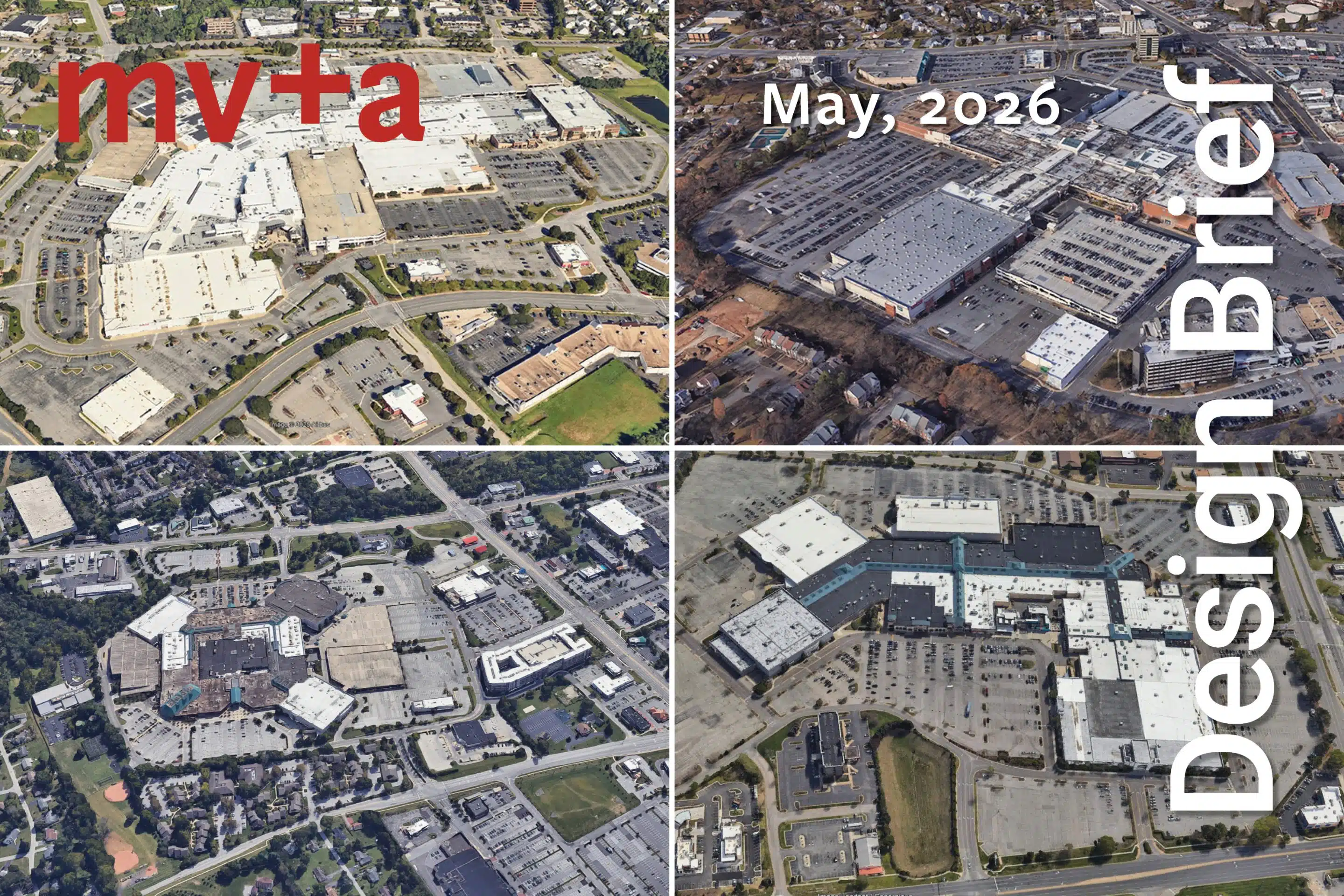
MALLS MATTER | From Retail Relics to Mixed-Use Infrastructure
MV+A principals Neville Fernandes and Brian Szymanski recently sat down to discuss the current state of retail malls and the innovative work MV+A has been cultivating within this exciting albeit challenging market niche. What follows is a deep-dive into this work and the unique, emergent opportunities it has to offer.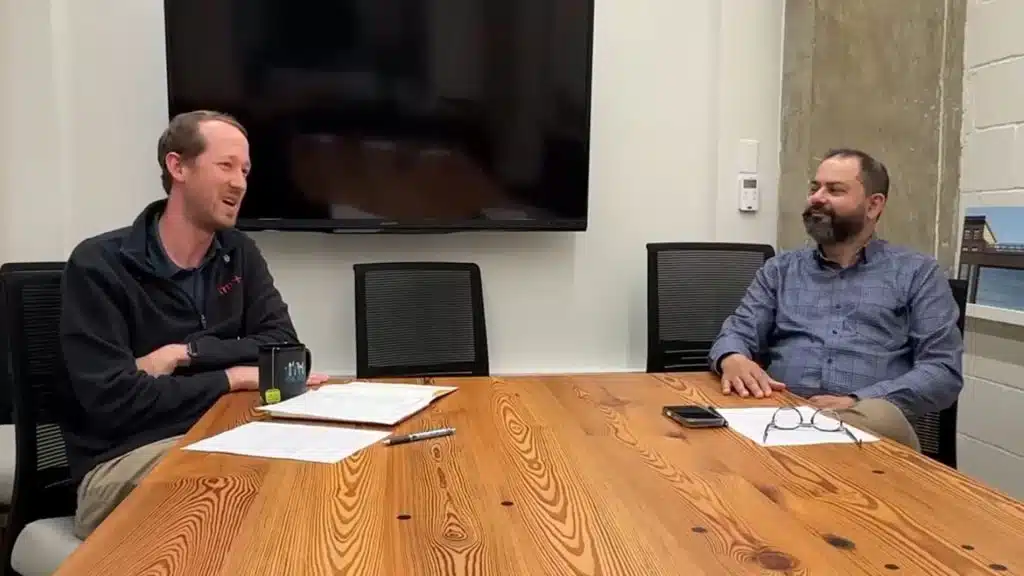 L-R: MV+A Principals Brian Szymanski and Neville Fernandes. Click to view conversation highlights.
MV+A MALL PROJECTS TO DATE:
- Monmouth Mall | Eatontown, NJ
- TownMall of Westminster Mall | Westminster, MD
- Woodbridge Center Mall | Woodbridge, NJ
- North Dekalb Mall | Decatur, GA
- Annapolis Mall | Annapolis, MD
- Wheaton Mall | Wheaton, MD
- Durango Mall | Durango, CO
- Ballston Quarter Mall | Arlington, VA
- Chesterfield Town Center | Richmond, VA
- Exton Town Center Mall | Exton, PA
- Dulles Town Center Mall | Dulles, VA
- Broward Mall | Plantation, FL
MORE THAN A PLACE TO SHOP
For many Americans, the mall was never just a place to shop. It was the social center—a place where, as MV+A Principal Brian Szymanski recalls, parents could drop you off, you’d wander with friends, maybe grab some food, and simply spend time together. That familiarity is part of what makes the mall’s transformation both emotionally charged and strategically significant.
E-commerce reshaped consumer expectations. Anchor tenants weakened or disappeared. Preferences shifted toward experiential retail, open-air environments, and food-driven destinations. Yet the narrative of the “dead mall” is as incomplete as it is compelling. As Brian puts it:
“It’s clear that malls are changing from what they once were. Many of them are struggling and many of them have opportunities for new life.”
Today, many aging malls occupy some of the most strategically valuable redevelopment sites in metropolitan America. The question is no longer whether these places will change, but what they become—and who is prepared to lead that transformation.
 Imagining the Possibilities
THE SPECTRUM OF INTERVENTION
One of the most important things to understand about mall redevelopment is that there is no single strategy. Approaches range from light repositioning to near-total reinvention—and selecting the right point on that spectrum is as consequential as any design decision that follows.
At one end, some malls need very little: a strong tenant, refreshed landscaping, updated facades, or improved public space. Small moves can dramatically shift perception and reactivate momentum. As Brian explains:
“Sometimes these malls, all they need is a very light touch and it can have such a profound difference and impact on your perception of that mall. A lot of times we’ll look at just trying to land one key tenant that can lead to other leasing successes. You get that one new restaurant and all of a sudden people are back at that mall—and seeing the opportunities there starts to drive foot traffic.”
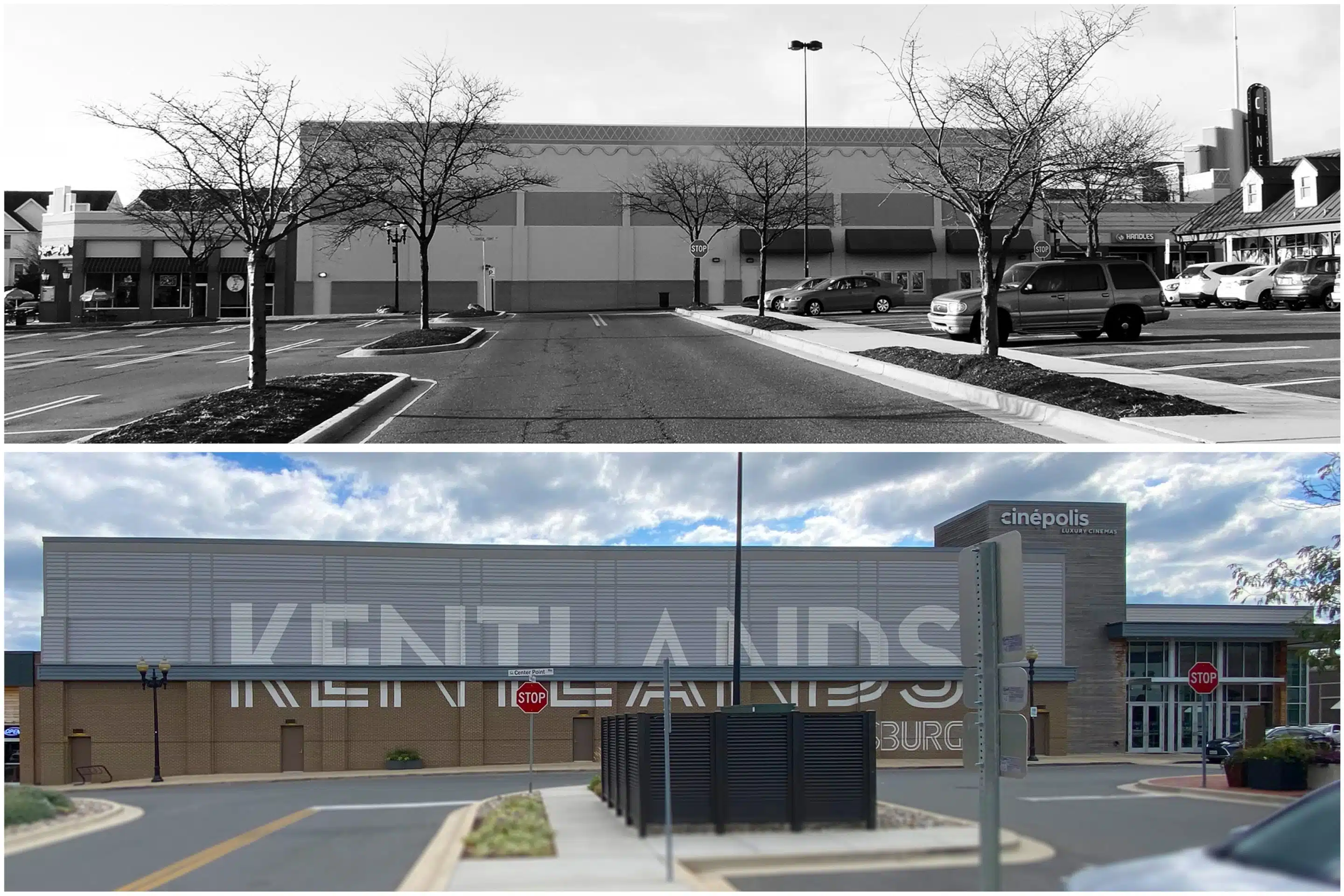 Sometimes cosmetic upgrades can have a major impact. Kentlands Marketplace for KIMCO Realty.
At the other end are projects requiring wholesale transformation. When significant portions are demolished, freed land becomes the opportunity. MV+A Principal Neville Fernandes describes Lulah Hills, one of the firm’s most complete reinventions:
“Lulah Hills maintains a cinema and some adjoining retail tenants, but otherwise completely tears down the mall. Crisscrossing main streets divide the site into four quadrants; a network of green open spaces then form focal points across the site. Eventually, this all creates a multilayered, multi-height neighborhood that gives you no hint that there was a mall here at one time.”
Between these poles lies a rich middle ground—including the vacant anchor, which is frequently the best place to start. Brian explains why:
“When you demolish an anchor at the end cap of a mall, this is a perfect development site—because new development in that location is not taking parking from other healthy portions of the mall, and it is not blocking visibility to other portions of the mall. It’s a great spot that doesn’t steal parking from the rest of the mall and can help breathe new life and a new identity into the mall.”
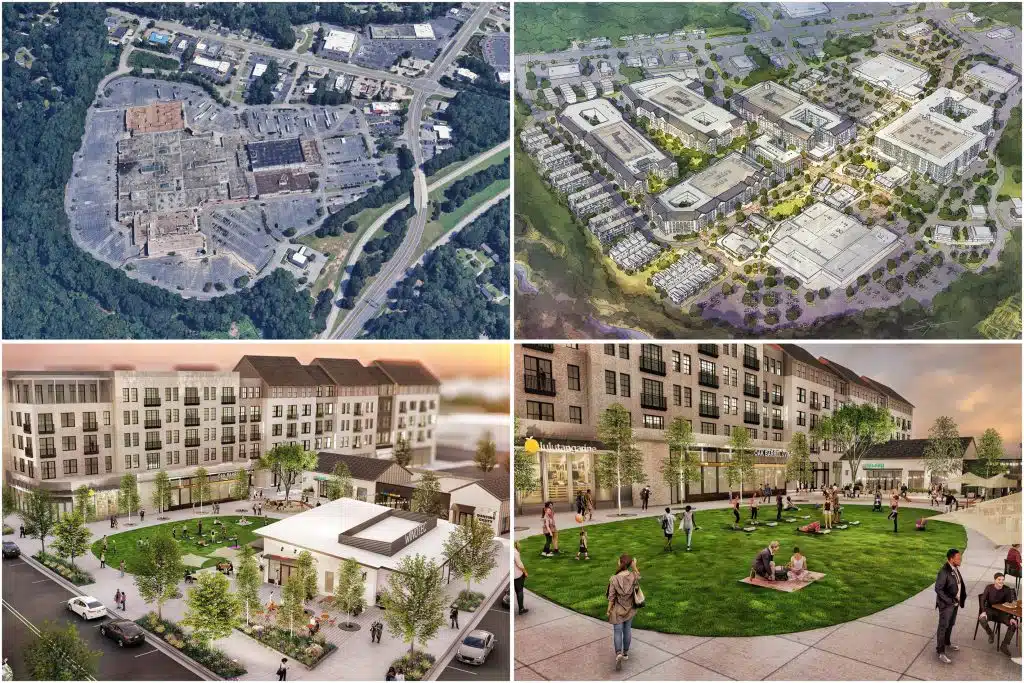

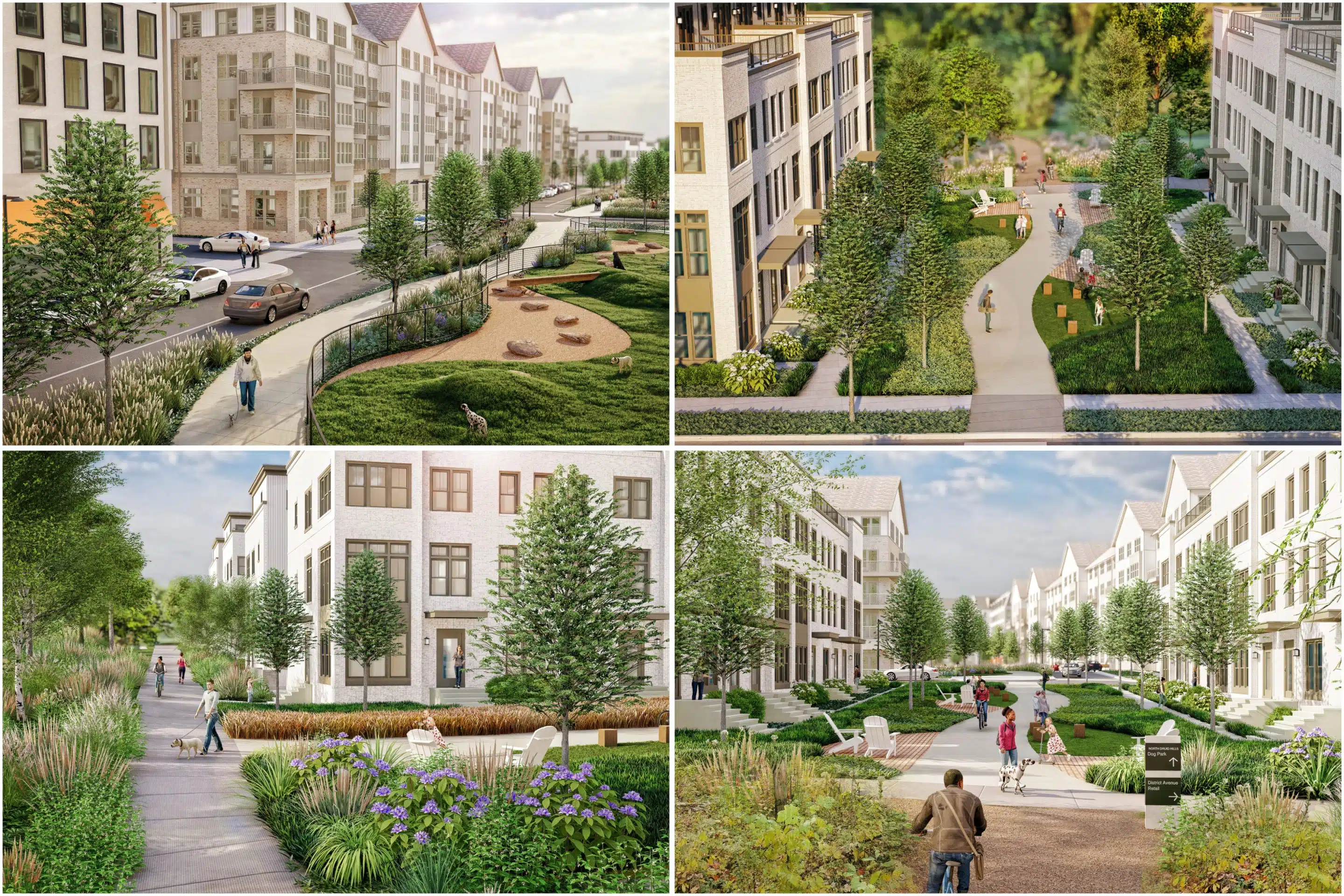 Reinventing the former North Dekalb Mall as Lulah Hills in Decatur, GA for EDENS. Visualization by Land Design.
WHY THESE PROJECTS ARE UNIQUELY COMPLEX
The most persistent misconception about mall sites is that abundant land means abundant opportunity. The reality is more constrained. Brian describes how quickly that assumption unravels:
“You can look at these malls, and it looks like such a massive site, a building floating in a sea of parking. You can’t just go and drop a new building right in that parking field—that’s going to block all visibility and all access back to the mall, or you’re going to kill the mall.”
Below the surface, the infrastructure inherited from the original mall—utilities, service corridors, loading systems—can become serious obstacles when a site is being turned inside out:
“These malls often have big service corridors around their exterior that are needed to serve all the parts of the mall. Once we start trying to turn spaces inside out, dealing with the loading, the service, the utilities is a massive, massive challenge that we have to contend with.”
 Contending with sprawling blank facades, unsightly loading bays and mechanical equipment often requires thoughtful and cost-effective screening solutions.
Certain new uses compound that challenge further. Neville describes the grocer—now a near-universal ambition in mixed-use mall redevelopment—as a program unlike any other:
“A grocer is very unique in that it’s not just a store. It really is a giant fridge; they also have huge demands with how they get produce in daily and get trash out. Their needs are pretty tough compared to other retail programs to incorporate into new development.”
And scale compounds everything. Brian is quick to point out that even routine-seeming upgrades become significant decisions at mall dimensions:
“It might be easy to say, oh, this is a dated light fixture, let’s replace it. But there might be hundreds or thousands of that light fixture in the mall—that’s very expensive to change. So really trying to consider where you’re going to get the most bang for your buck—in a way that’s going to get new tenants to help pay for that?”
Parking underlies all of it. Neville frames the governing principle:
“Form follows parking in some ways—and especially when you’re placemaking, there’s a nice synergy between public space, street space, program, and parking. It’s always that delicate balance that has to be maintained between all these users.”
 Creating vibrant experiences from mundane circumstances.
TURNING THE MALL INSIDE OUT
Perhaps the most fundamental design shift in mall redevelopment is the move from inward-facing to outward-facing.
Neville articulates what that shift demands in practice:
“In all the mall redevelopments that we’ve been involved with, how we are layering landscapes, street trees, basic amenities of a street that you take for granted—how they all come together is not just about how it looks, but it’s about how it works. How people move, where they pause, where they enjoy themselves, and how that integrates with the architecture. Flipping the script on the old mall diagram, it’s very important how you layer your green spaces, how you do your streets, how you do your landscaping.”

 Monmouth Mall in Monmouth, NJ for KRE .
PROGRAMMING NEW PLACES
The shift from mall to mixed-use district is not only a physical transformation—it is a programming one, and it is changing the tenant calculus in ways the old retail-only model never anticipated.
Neville describes one of the most telling shifts:
“Now that there’s residential program on the site, suddenly a grocer use becomes very, very attractive—and we’re seeing that on at least two of our projects.”
On the experiential end, Brian identifies a clear and growing demand signal:
“I’m definitely seeing a lot more of a push towards more experiential users—your pickleball courts, climbing gyms, escape rooms, places where you go to do something. Some of these users need a significant amount of space and they’re perfect to backfill different anchor spaces that are in malls.”
Neville connects this to a broader shift in what these environments are being asked to do:
“It’s not just about shopping, but it’s about living a life. The programming is changing from pure retail shopping to more of a lifestyle living.”
The result, when it works, is something neither retail nor residential alone could produce:
“All mall redevelopments are almost like mini cities in a way. They’re large enough where they can actually provide these kinds of amenities.”
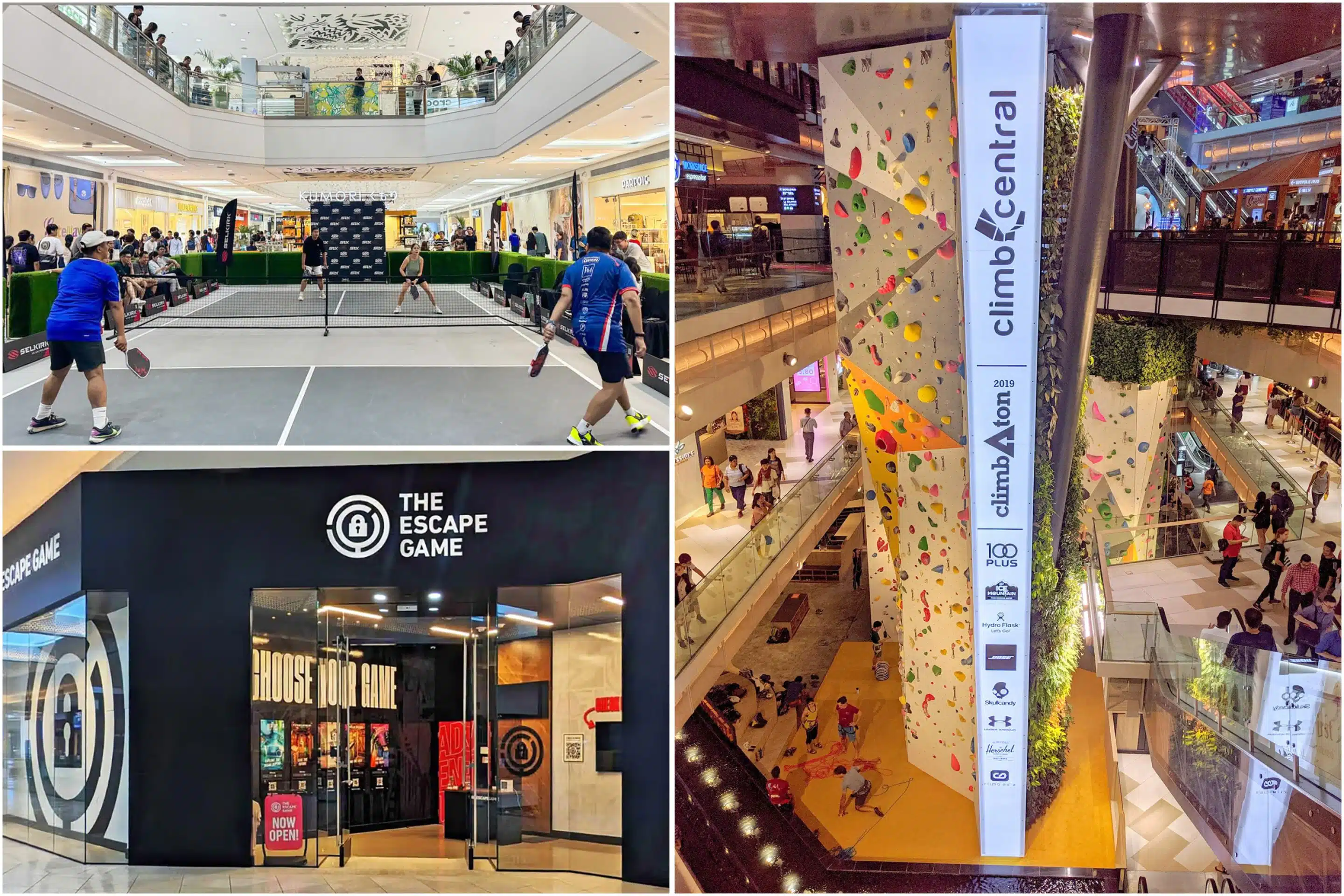 Evolving program uses within mall environments.
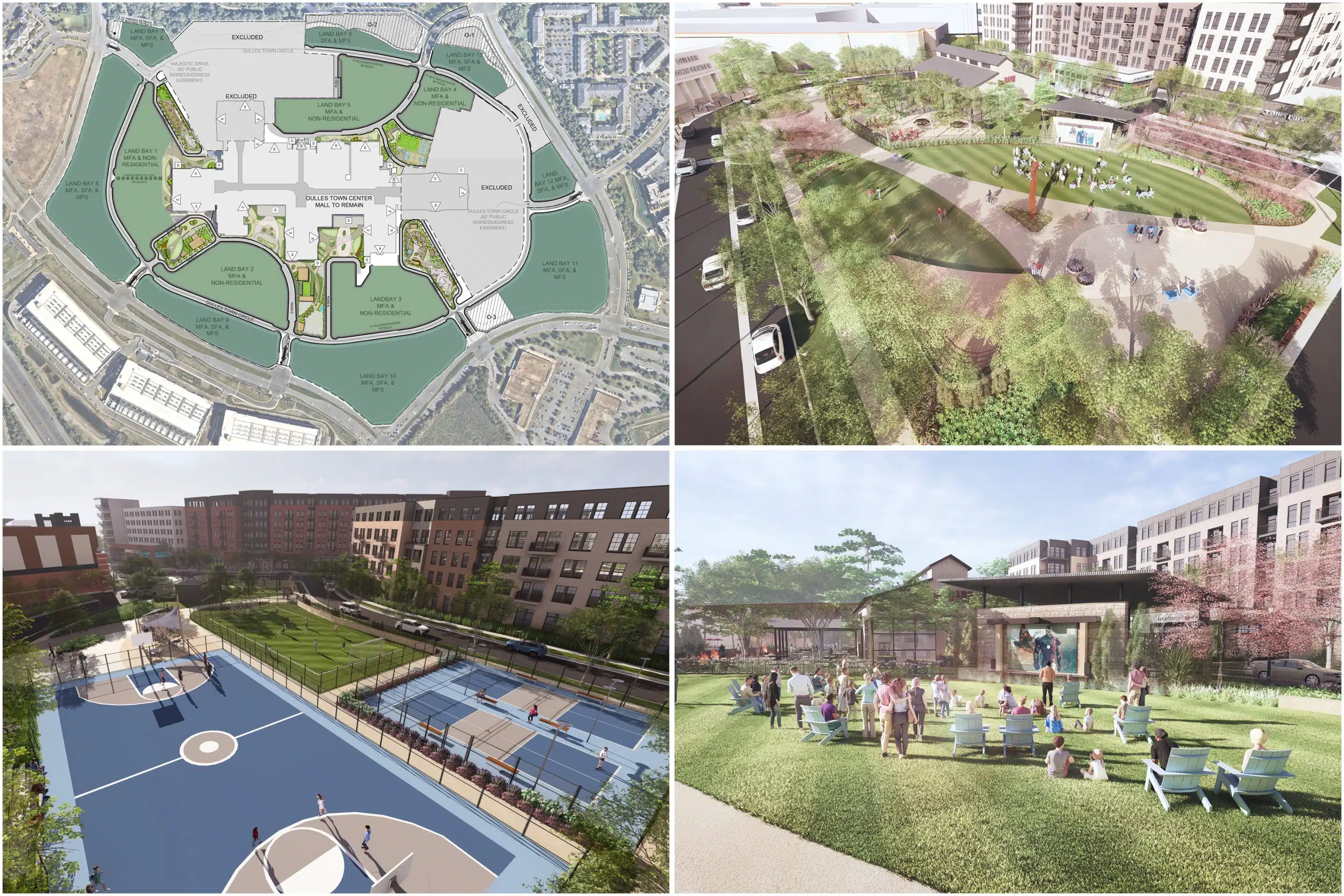 Innovative landscape programming at Dulles Town Center | Dulles, VA for Virginia Investment Properties, LLC. Visualization by LandDesign.
THE NEXT LIFE OF THE MALL
These sites possess attributes that most development opportunities simply don’t: land at a scale impossible to assemble elsewhere, established transportation access, existing infrastructure, community familiarity, and growing municipal alignment around density and housing. As Brian captures it:
“What’s so exciting about all these mall redevelopments is just that, as land becomes more and more scarce, these sites are perfect for mixed-use development. All these sites have great transportation access and they’re already situated in places where that increase in density isn’t going to impact existing neighborhoods.”
As Neville puts it:
“It’s a wonderful opportunity to reimagine these sites. What could they become? They’re so large, but they’re perfect for new kinds of neighborhoods.”
Brian captures what that commitment looks like in practice:
“I think some of the most innovative and exciting projects we’re gonna see in the next coming years and decades are gonna be at mall sites. And we’re very happy to just be there on the front lines leading the way on these changes.”
CLOSING THOUGHTS
The mall was never just a building. It was a mirror of how a generation lived, shopped, socialized, and understood community. That it now needs to become something else is not a failure — it is an invitation.
The sites remain. The infrastructure remains. The memory remains. What changes is the ambition: from a single inward-facing use to something more honest about how people actually live today—the essence of modern mixed-use: live, work, and play.
The redevelopment of the American mall is, at its best, less an act of erasure than an act of translation. That is the work. And by every indication, it is just beginning.