MULTIFAMILY HOUSING | Fueling the Comeback
In the post-COVID era, multifamily housing entered a period of sustained disruption. Supply chain breakdowns, inflationary pressures, and rising interest rates created a challenging and uncertain development environment. For a time, the industry mantra was simple: “Stay alive till ’25.”
That said, multifamily is coming back—and at MV+A, it is returning with real momentum. We currently have five projects under construction (or breaking ground), delivering more than 1,100 units. Another five projects are entitled or nearing final entitlement, representing over 1,200 units. In design development, we are advancing an additional five projects totaling 1,600+ units, along with three townhome communities expected to deliver approximately 100 new homes.
Altogether, this represents more than 4,000 new homes across the greater region. What follows is a cross-section of this work—projects that reflect both the scale of demand and the evolving forces shaping our region’s housing landscape.
BUILDING BEGINS
Two of our six projects under construction broke ground in 2025, reflecting continued forward movement as previously entitled work advances into delivery.
The Elms at Mt. Vernon is a phased, 5.42-acre redevelopment along Fairfax County’s evolving Richmond Highway corridor. The project replaces an underutilized site with a more compact, walkable residential environment. Phase I introduces a 280-unit multifamily building organized around a series of community-oriented green spaces that function as both amenity and environmental infrastructure. A future Phase II will add townhomes, completing the residential program and reinforcing broader corridor intensification.
Trolley Square Apartments in Wilmington, DE exemplifies context-driven urban infill within one of the city’s most walkable, amenity-rich neighborhoods. The 130-unit project builds upon an established street grid, active retail environment, and proximity to Brandywine Park—prioritizing streetscape continuity, architectural fit, and compact density.
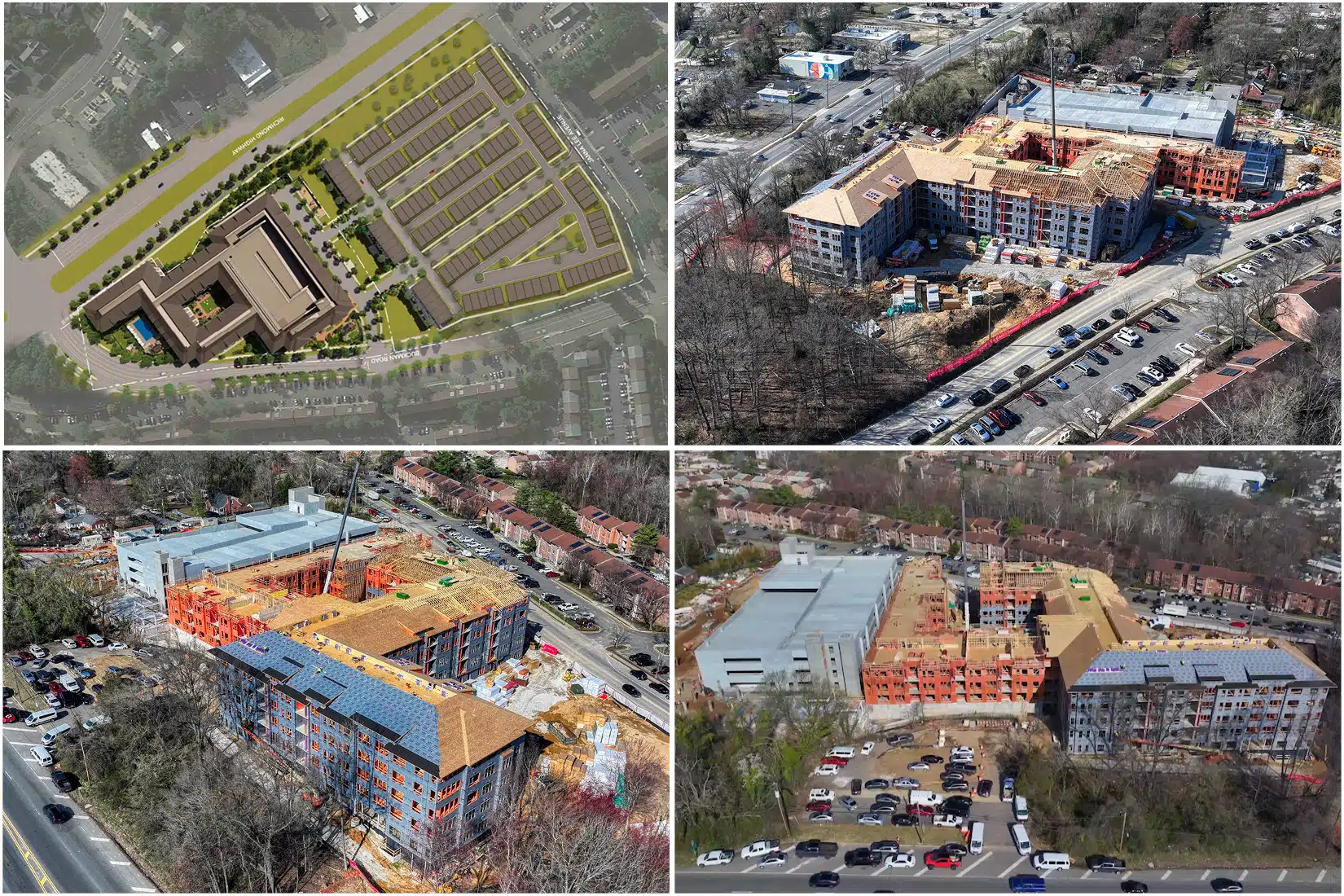 The Elms at Mt. Vernon | Fairfax County, VA | Elm Street Communities
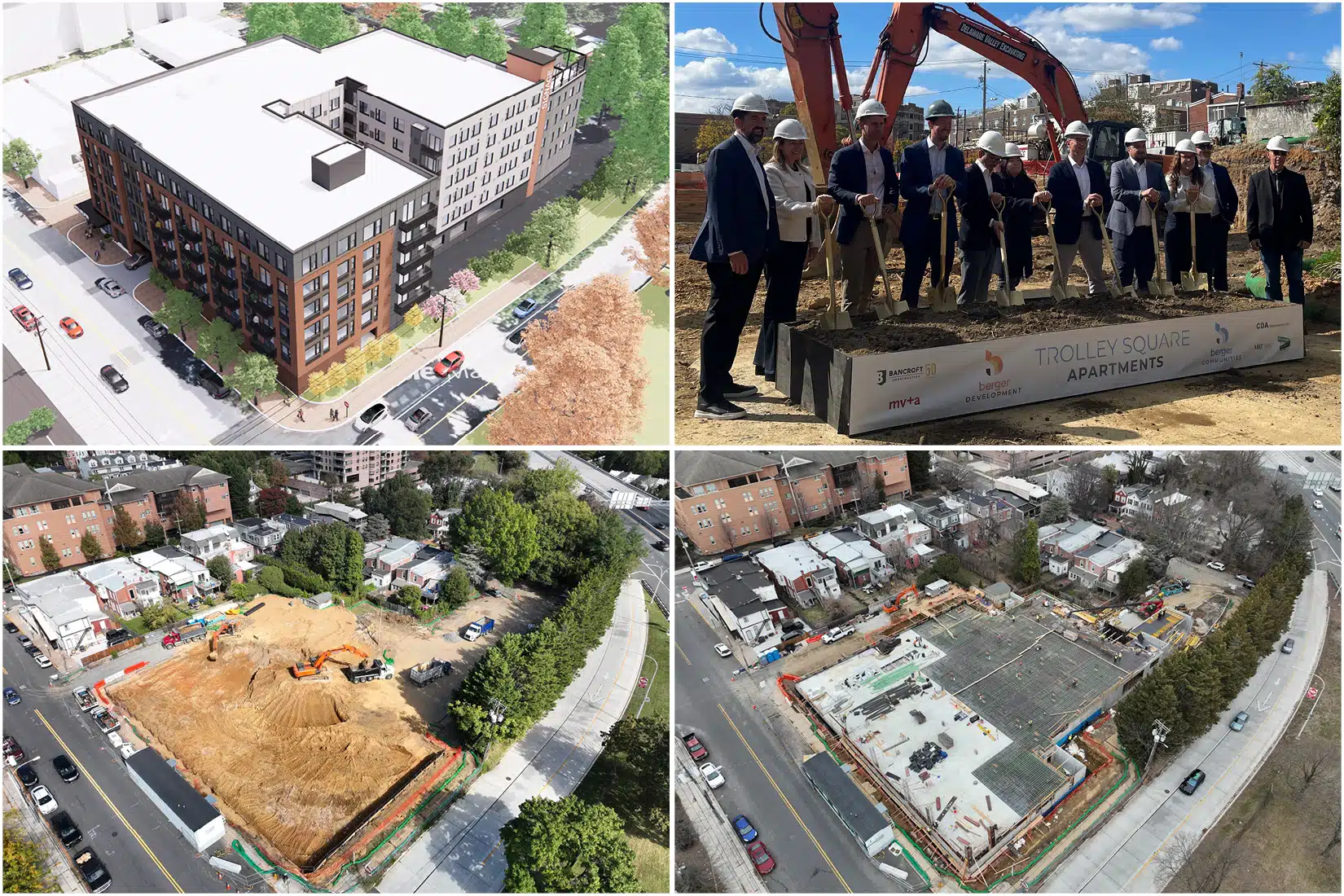 Trolley Square Apartments | Wilmington, DE | Berger Rental Communities
The Elms at Dunn Loring demonstrates transit-oriented multifamily infill within Fairfax County’s thriving Merrifield district. Located near the Dunn Loring Metro and Mosaic District, the 230-unit project reinforces an already walkable environment through compact density, structured parking, and amenity-driven design tailored to a competitive rental market.
Isaac Newton Square represents the first phase of a broader repositioning within Reston’s emerging innovation district, where aging office parks are being adapted into mixed-use, walkable environments. Located near the Wiehle–Reston East Metro and the Dulles Tech Corridor, this 345-unit project supports a shift toward a more balanced live-work framework, while linking to Nature’s Edge Park and preserving mature tree canopy.
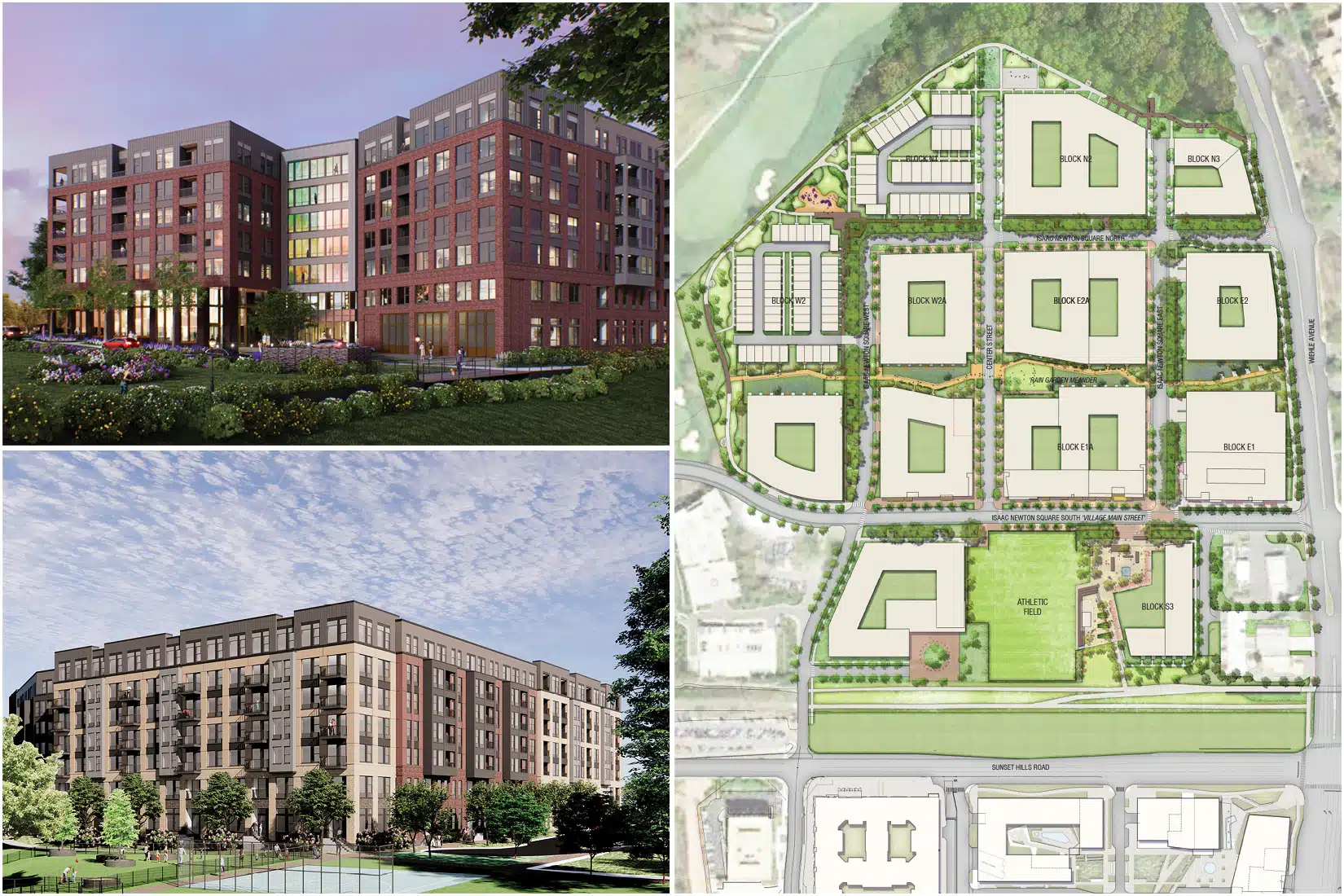 Isaac Newton Square | Reston, VA | JLB Partners
Westbard Square Phase II continues the evolution of a legacy shopping center into a walkable, mixed-use district in Bethesda. As master planner and architect for both phases, MV+A led full entitlements and design—reconfiguring a conventional retail site into a connected street network with integrated residential density, activated public spaces, and neighborhood-serving retail.
NoBe II Multifamily advances North Bethesda’s transit-oriented growth with a 100% affordable multifamily development delivering 268 units near the Metro. The project reinforces Montgomery County’s commitment to equitable housing by integrating high-density, income-restricted residences within a rapidly urbanizing corridor—supporting long-term affordability, walkability, and transit access.
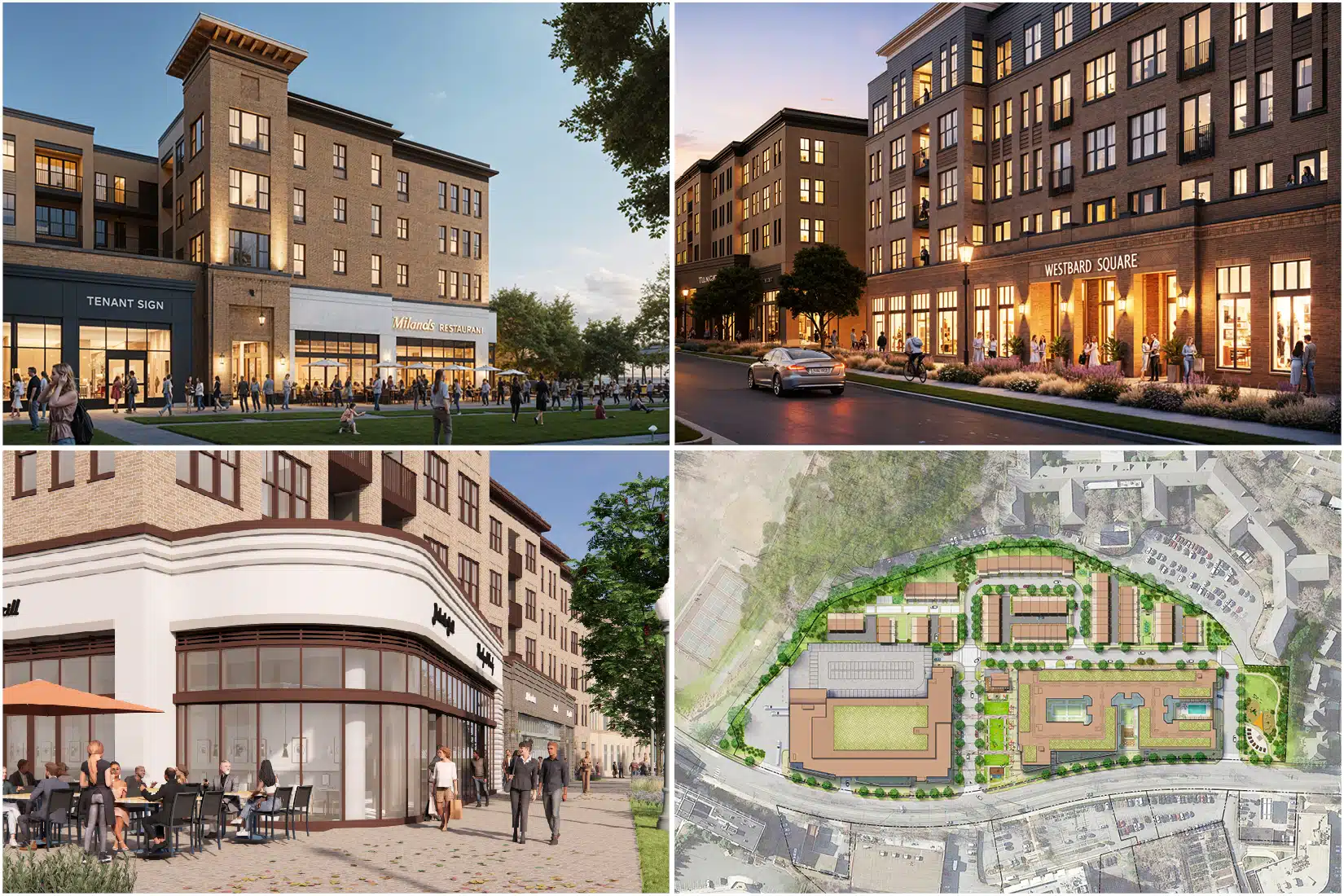 Westbard Square Phase II, Multifamily | Bethesda, MD | Greystar
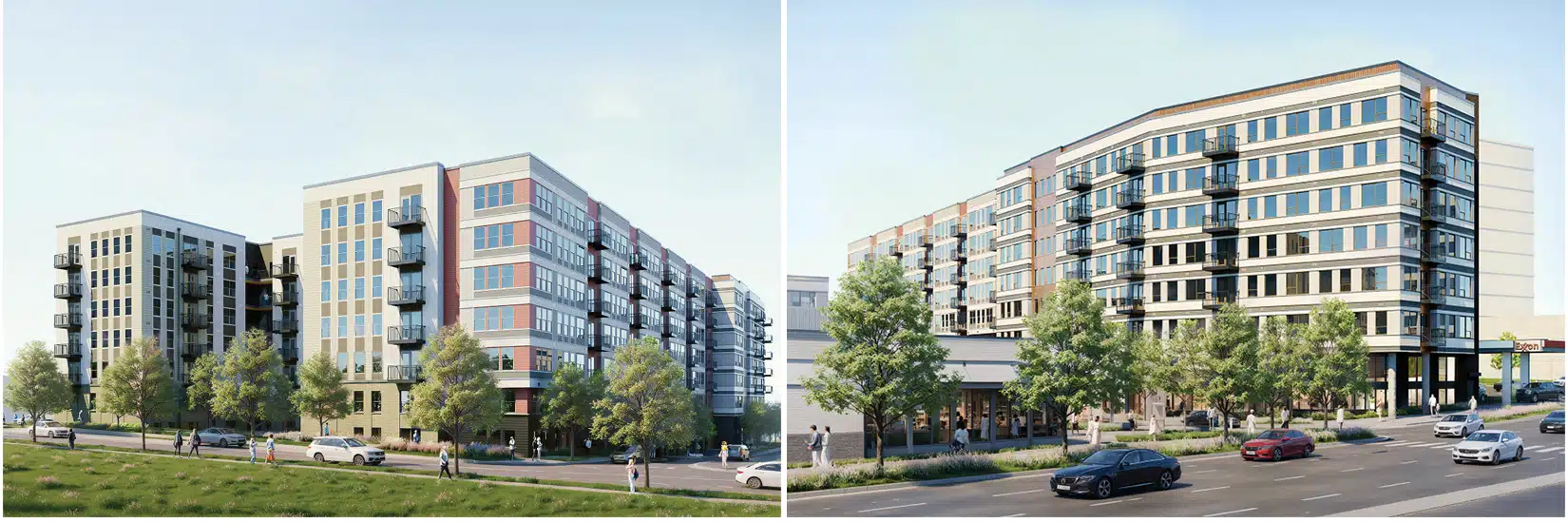 Trolley Square Apartments | Wilmington, DE | Berger Rental Communities
ENTITLEMENTS IN ACTION
Several multifamily projects have achieved full entitlement, with one nearing final approval—positioning the next phase of work for delivery as market conditions align.
Prospect Hill in Greenville, SC is fully entitled and positioned for delivery within a growing urban corridor. Currently on hold pending final contractor selection, the project will introduce over 150 units within a walkable framework that supports the city’s shift toward compact, mixed-use growth.
Reservoir District | Parcel 4 in Washington, DC is fully entitled and introduces a mixed-use multifamily building anchored by a full-service grocery and more than 280 residential units. The project establishes a neighborhood center, integrating daily-use retail with an activated public realm.
 Left: Prospect Hill | Greenville, SC | Gordon Road Capital / Red Fox Development, Right: Reservoir District | Parcel 4 | Washington, DC | Jair Lynch
Herndon Multifamily is nearing final approvals within an evolving Fairfax County submarket. The project will deliver more than 400 units and 60 townhomes, contributing to a corridor shifting from single-use commercial toward a more balanced, walkable environment.
2600 Columbia Pike is fully entitled under Arlington’s Form-Based Code, replacing an earlier large-format retail concept, also designed and entitled by MV+A, with a more context-responsive, in-line retail approach. The 270+ unit project emphasizes finer-grain streetscape activation, reduced retail scale, and improved pedestrian connectivity—supporting Columbia Pike’s continued evolution as a neighborhood-oriented corridor.
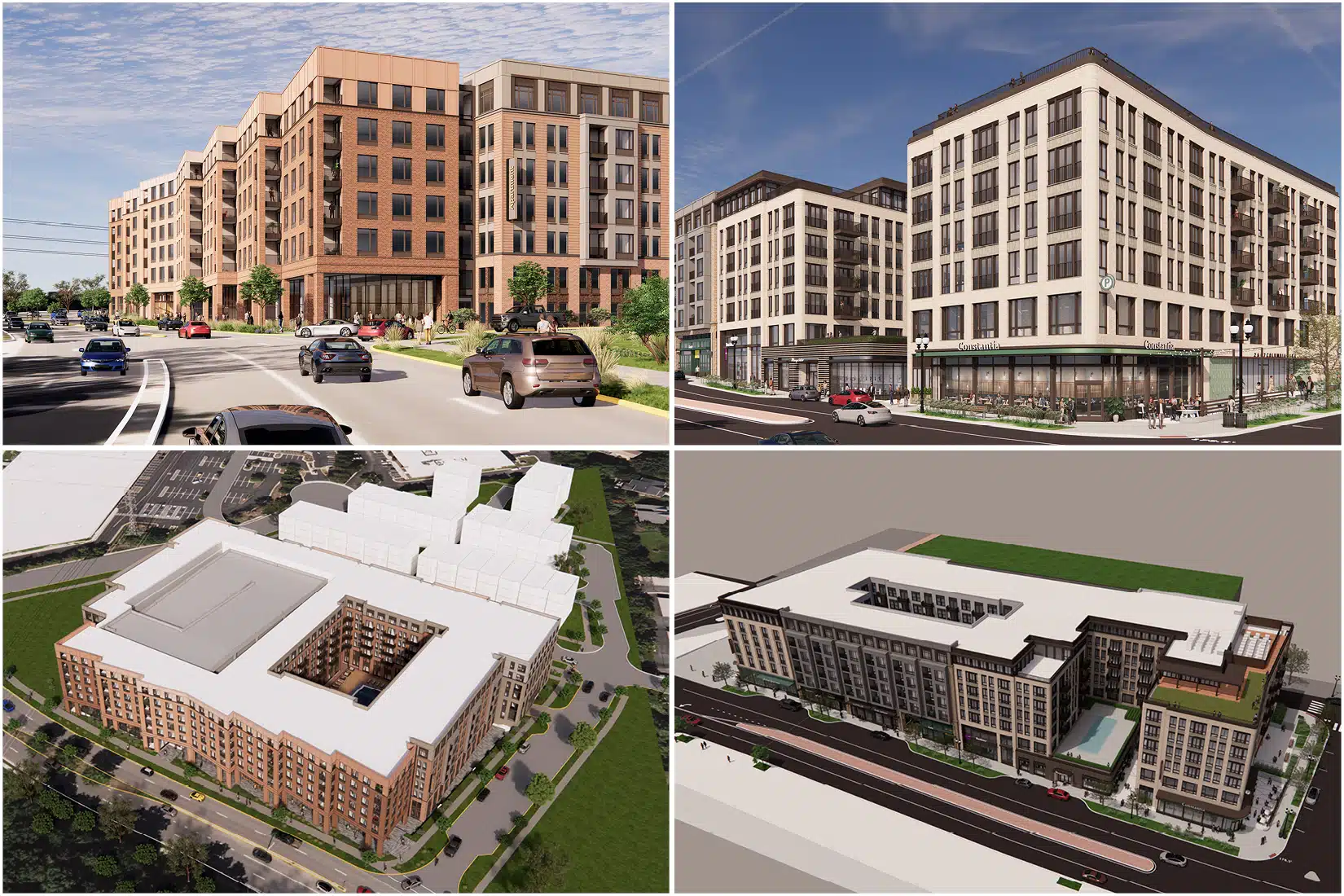 Left: Herndon Multifamily | Herndon, VA | Rooney Properties. Right: 2600 Columbia Pike | Arlington, VA | Kennedy Wilson
ON THE BOARDS
Projects currently in design development reflect the next wave of delivery—aligning density, site planning, and program with evolving market conditions and long-term growth strategies.
1001 South Glebe Road in Arlington is advancing as a multifamily infill project within a highly visible corridor. The 366-unit development balances density, frontage activation, and site access—contributing to the continued urbanization of South Glebe Road.
Academy Yard Multifamily in Odenton is progressing within a transit-adjacent growth area near MARC service. The 296-unit project introduces new residential density in a suburban context, supporting Anne Arundel County’s efforts to concentrate growth around emerging mixed-use and mobility hubs.
Reservoir District Parcel 2 in Washington, DC is in design development as part of the broader McMillan redevelopment. The 236-unit project contributes to a graduated massing strategy across the site, reinforcing transitions between higher-density mixed-use areas and adjacent neighborhoods while supporting a cohesive street network and integrated public realm.
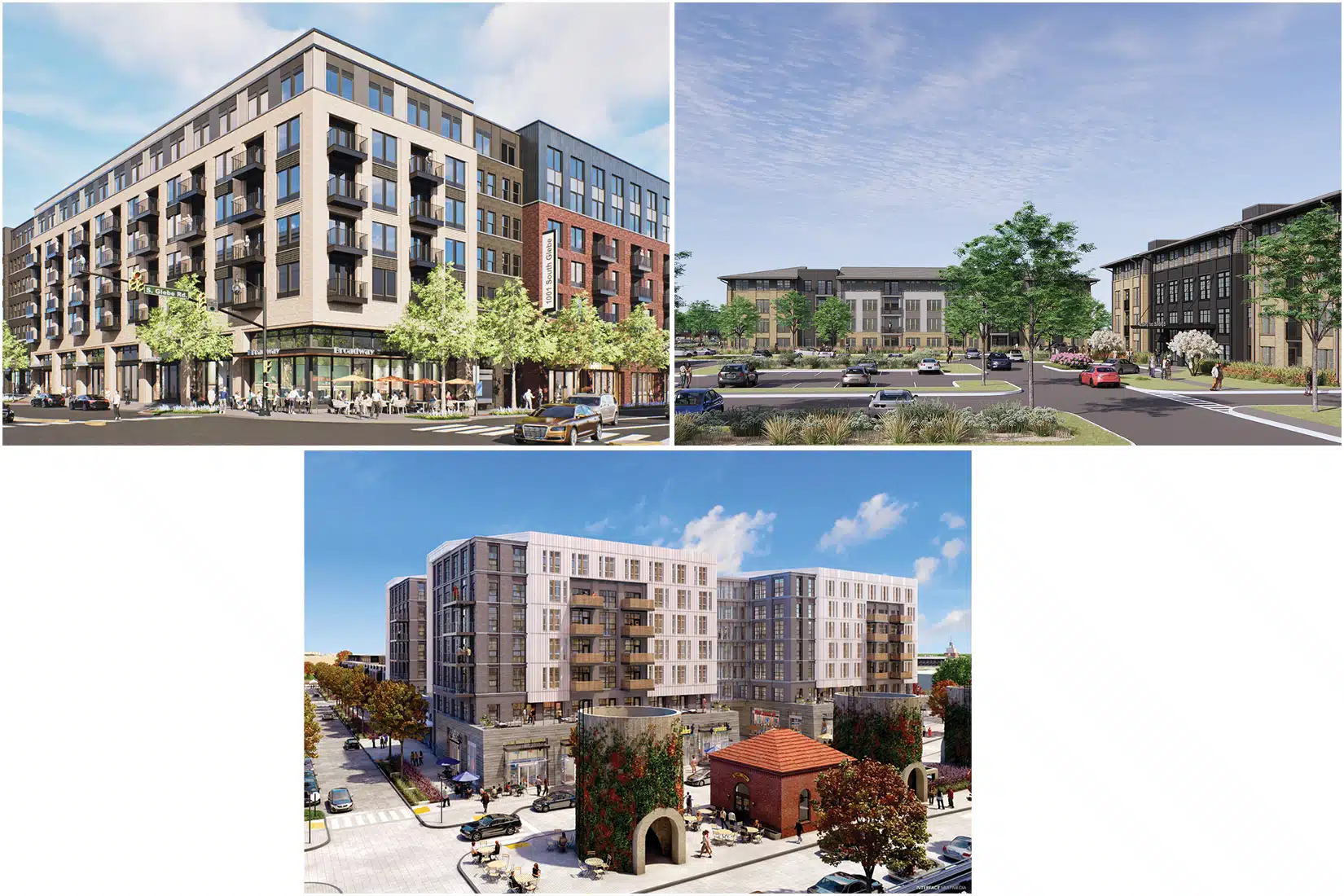 Clockwise from top left:1001 South Glebe Road | Arlington, VA | 1001 South Glebe Road Partners, Academy Yard Multifamily | Odenton, MD | Stonebridge Carras, LLC, Reservoir District Parcel 2 | Washington, DC | Jair Lynch
OBSERVING THE MARKET
Across this cross-section of projects—from construction through planning and design development—clear patterns are emerging.
High-rise residential, once a dominant aspiration, is increasingly challenged by current market conditions. Many projects struggle to pencil without significant subsidy or exceptional location advantages. In contrast, more efficient mid-rise multifamily developments—particularly those supported by public incentives or located near transit—are proving more viable.
Transit-oriented sites continue to anchor much of the region’s residential growth, reinforcing the importance of access, walkability, and long-term infrastructure alignment.
At the same time, mixed-use development appears to be recalibrating. Rather than vertically integrated programs, many projects are favoring simpler configurations—either all-residential or more loosely coupled uses such as freestanding, surface-parked retail. These shifts reflect both financial realities and evolving market demand.
Taken together, these trends point toward a more pragmatic approach to housing delivery—one that prioritizes feasibility, timing, and clarity of execution. While the ambition of past cycles has not disappeared, it is increasingly being refined through a more disciplined lens.