

At MV+A, professional development is a critical core value and central to our professional mission. As part of a comprehensive approach to this aspect of our practice, we have developed a variety of in-house, staff-led knowledge sharing programs.
In previous Design Briefs we’ve covered MV+A’s commitment to helping young designers with their ARE prep as well as our Design Lab program—a recurring knowledge sharing seminar for disseminating new ideas, practices, lessons-learned and other team-building topics intended to bolster our expertise and skills as a community.
In this issue Colleen Korp and Harini Chandrasekhar, with some assistance from Eleanor Krause, provide an insightful overview of MV+A’s ‘Growth Ladder’ approach to professional development and leadership.
PROFESSIONAL DEVELOPMENT SERIES: The MV+A ‘Growth Ladder’
About two years ago, MV+A was experiencing a period of rapid growth and we realized that we needed to document standards and processes with new energy. This growth provided us with a great opportunity to examine our firm culture, to the benefit of current staff as well as future hires. As part of this process, we realized we needed a “Growth Ladder.”
The Growth Ladder was created to provide a road map for staff to advance in their careers at MV+A. We’re fortunate here to have so many of our staff staying with us for many years, and we wanted to ensure that this continues. To do that, we needed to make sure there was enough room for everyone to grow and continue learning.
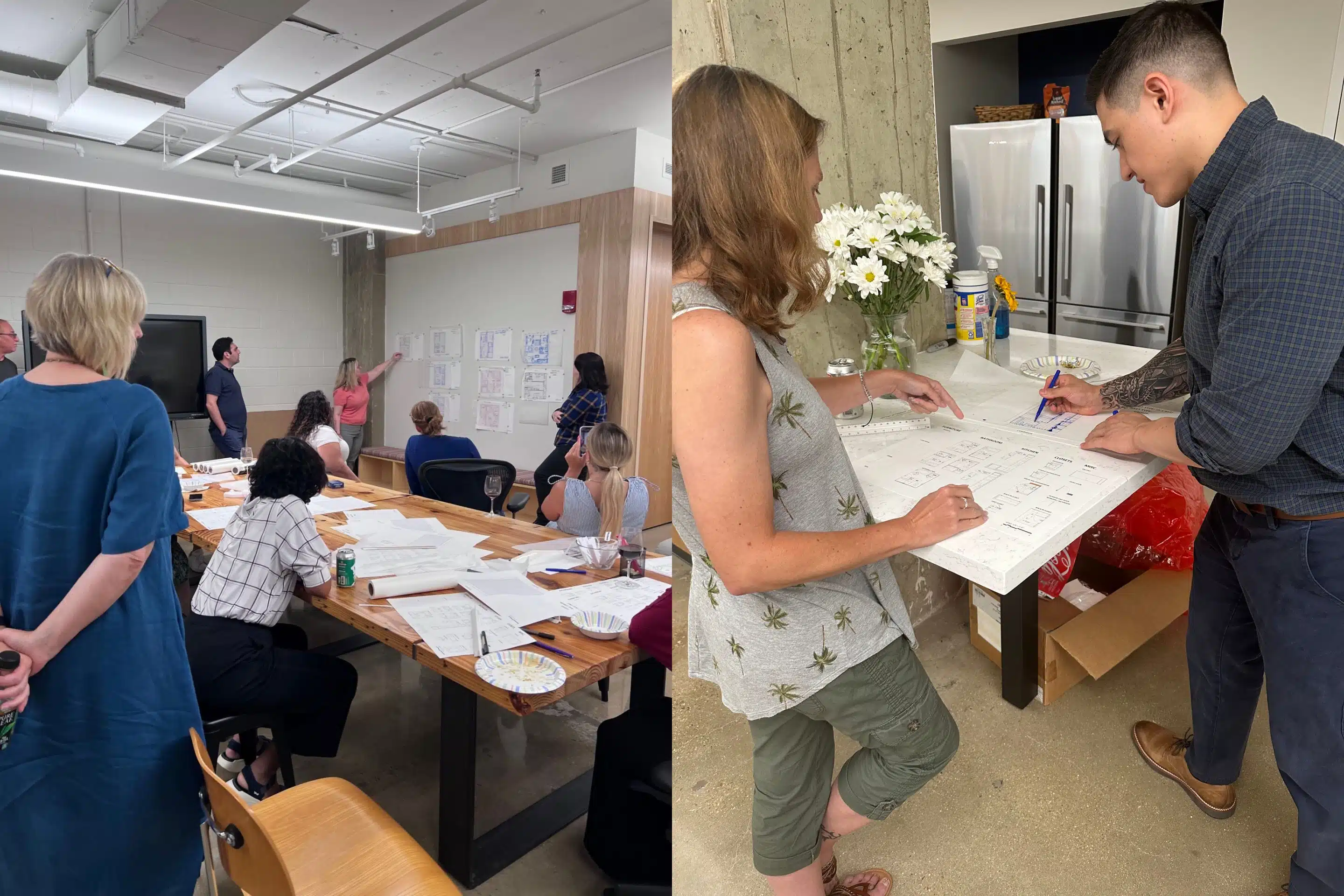
To that end, the Growth Ladder was developed as two tracks (urban design / entitlements + architecture) based on the multi-disciplinary work in the office, with several levels available in each track. There is no intent to lock someone into one of these tracks, but they do require different skills, particularly as a junior staff person advances in their career. Someone right out of school would start as a Designer and grow into a Project Architect or Project Manager with steps along the way. A theme to advancement is increased independence— not only being able to take on more scope and more complexity, but to do so more independently.
To illustrate that, the Ladder emphasizes the need for both technical (direct) and soft(indirect) skills at every level. This reinforces that technical skills aren’t the only ones we need to develop.
-
Direct Skills include:
-
Technical Building & Design Knowledge
-
Internal Team Interface
-
Consultant Interface
-
Owner/Contractor Interface
-
QC/QA
-
Project Data and Information
These skills relate to proficiency in project-related tasks. These are the skills that ensure that as a firm we are delivering the quality of work that we have come to expect.
-
-
Indirect Skills include:
-
Critical Thinking and Problem Solving
-
Growth, innovation, and Expertise
-
Teamwork, Communication, and Collaboration Skills
-
Community, Mentoring, and Relationships
-
Champion for the Firm
-
Marketing and Business Development
-
Business Sense, and Strategic Thinking
These skills help to create and maintain the firm culture, growth and collaborative environment.
-

The Growth Ladder acknowledges that not everyone wants to go into management and allows for everyone to find their own path. For example, the role of Senior Project Architect was a new one rolled out with the Ladder and was created as a more advanced role for those that are more focused on the design and documentation of our largest projects, letting the Project Managers handle the client and contract aspects of that project, working as a team to ensure the ideal staff and expertise is available for the project.
For those whose long-term goals include advancing to leadership positions in the firm, such as Associate, Senior Associate, and Partner are described in the Growth Ladder as well. These roles layer on top of the ‘base rolls’. For example, someone could be an Associate and also a Project Manager, since at MV+A firm leaders are key players on project teams. Becoming an Associate doesn’t have to mean saying goodbye to designing beautiful details! We’re a very horizontal structure here, which creates a supportive environment for growth and a “low-ego ethos” firm-wide. This also makes firm leadership very approachable for the staff and helps support our mentorship programs.
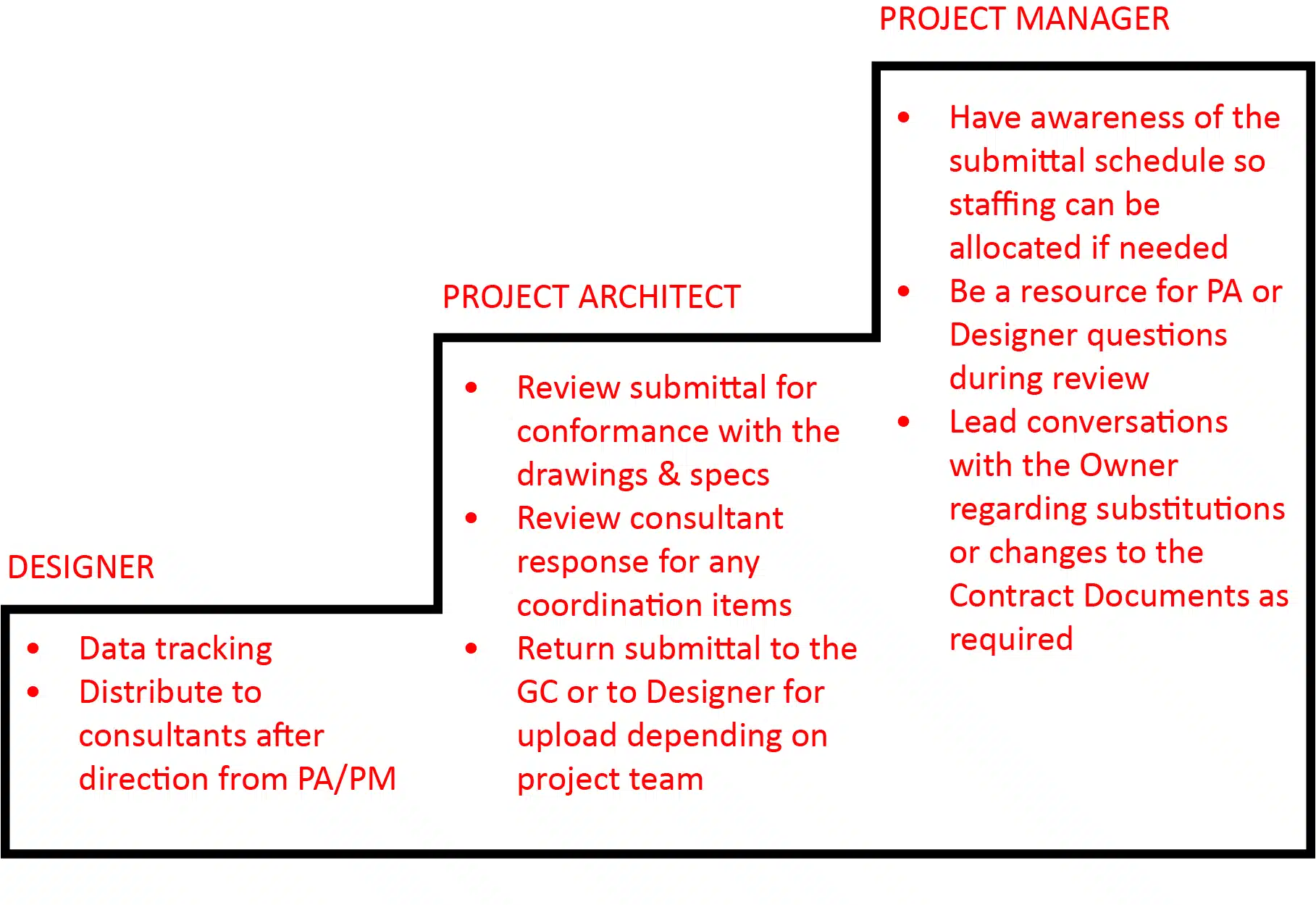 An illustrative example of how the task of Submittal Review evolves at each stage along the Growth Ladder
The Growth Ladder has proven to be a great tool for our mentorship programs, guiding discussions in our quarterly Mentor Check-Ins. Every staff member has a senior-level Mentor that they connect with on a quarterly basis, separate from their Project Manager, and one of the main discussions in those sessions is always professional development/growth. Along with AXP, the Ladder is a helpful tool for staff to use in advocating for the experiences they want to have at MV+A. [CK: i.e. “I need more CA time to get my license, AND to prep to be a PA!”]
Finally, the Ladder has also been a helpful guide for managers, providing uniform metrics to point to when conducting performance reviews, and to identify growth opportunities/challenges for staff they manage. The Growth Ladder grew out of conversations between staff and Associates, so it’s great to see it being so helpful for everyone!