
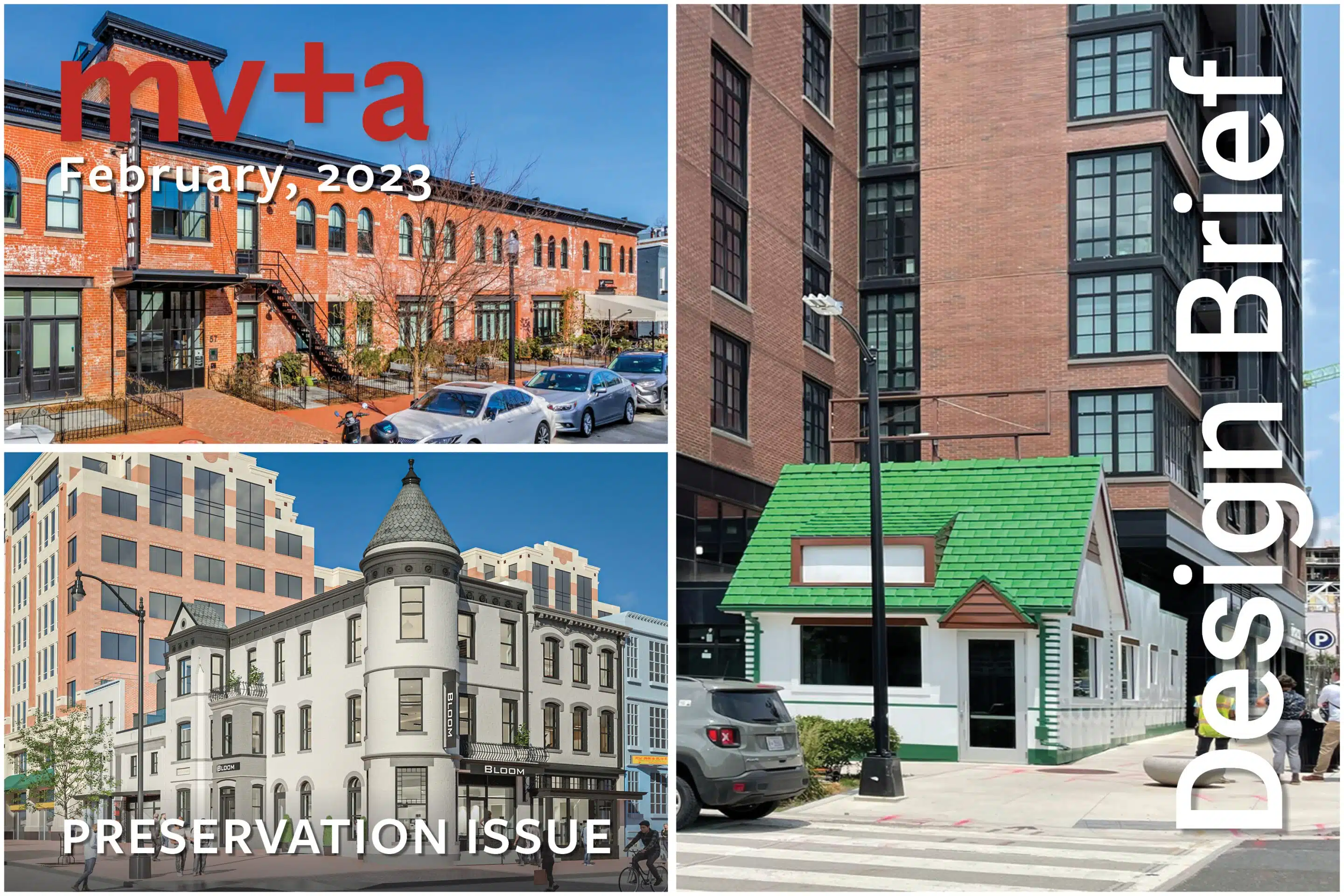
Historic Preservation at MV+A
While MV+A may be best known for our more complex, mixed-use projects, we have a steady stream of smaller, niche projects including a number of projects requiring detailed preservation know-how—often enough, no less complex in nature than some of those larger mixed-use projects.
In this Design Brief we will be looking a three very different preservation projects ranging in size, program, and project scope—all of which required the services of a qualified historic architect.
Chapman Stables
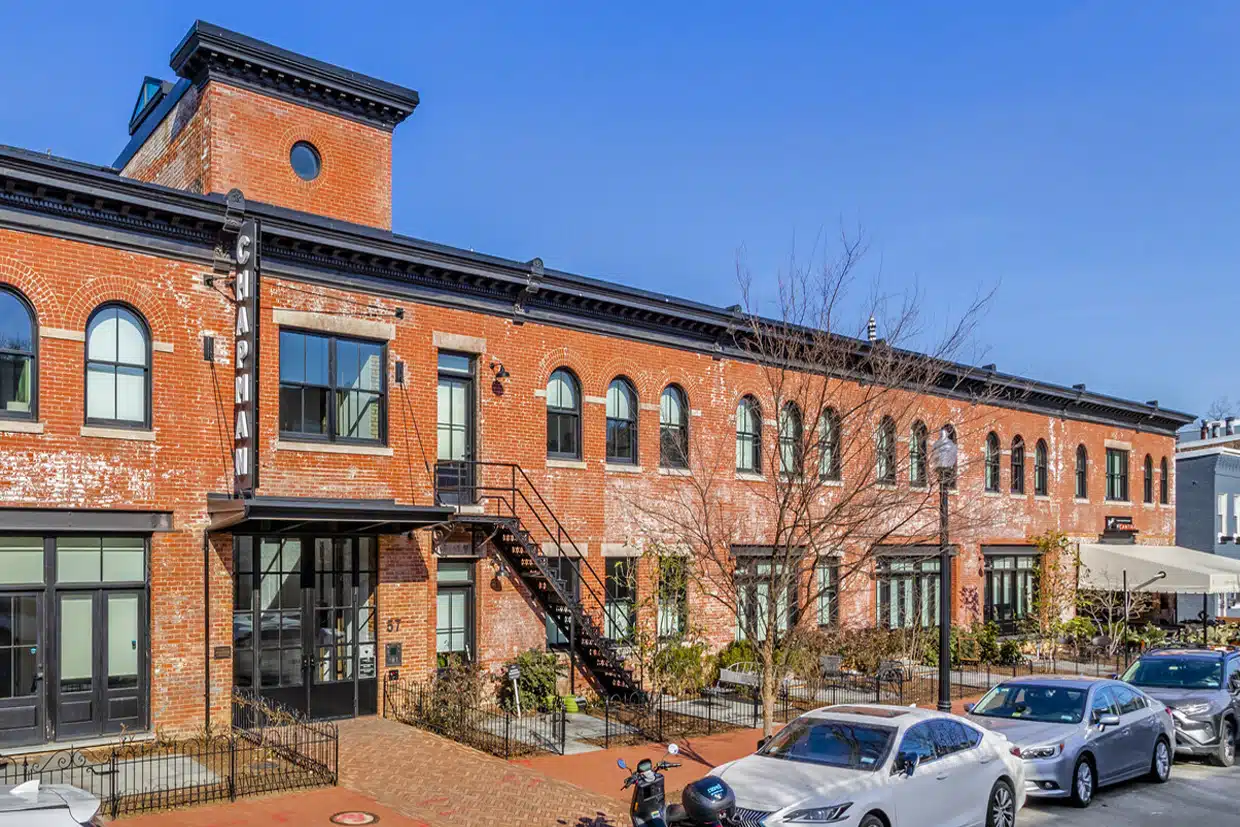
The Chapman Stables project features the incorporation of an historic stables structure as part of a proposed new multifamily residential development designed by Studio Twenty-Seven Architecture for Four Points, LLC. MV+A was engaged by Four Points to work with the DC Historic Preservation Office (HPO) and Historic Preservation Review Board (HPRB), to secure the necessary preservation approval for the broader development to move forward. The scope of this work included evaluating the building and site and producing a Preservation Plan with presentation and review documentation assessing conditions along with making treatment recommendations for the ‘character-defining features’ of the historic structures.
Over the years, the building served several uses beyond that of stables, including that of an automobile service and parking garage—marking an important turning point from the horse-based economy to one of automobiles. As one of a few remaining purpose-built, light industrial buildings of this era, the character-defining features of the project relate to the garage as much as to the architecture of the building. By example, a large opening in the second floor assembly, along with a corresponding roof tower above, once occupied by a service elevator for moving vehicles between floors, was required to be preserved and integrated into the proposed new design—preferably as a public space. Other character-defining features relate to extensive aspects of the building’s main façade along N Street—including but not limited to masonry openings and detailing, a cast-iron stair, and a projecting metal cornice.
MV+A was proud to be part of this award winning team to rehabilitate the Chapman Stables. View the awards presentation video here: 2020 District of Columbia Awards for Excellence in Historic Preservation [click].
The Little Tavern
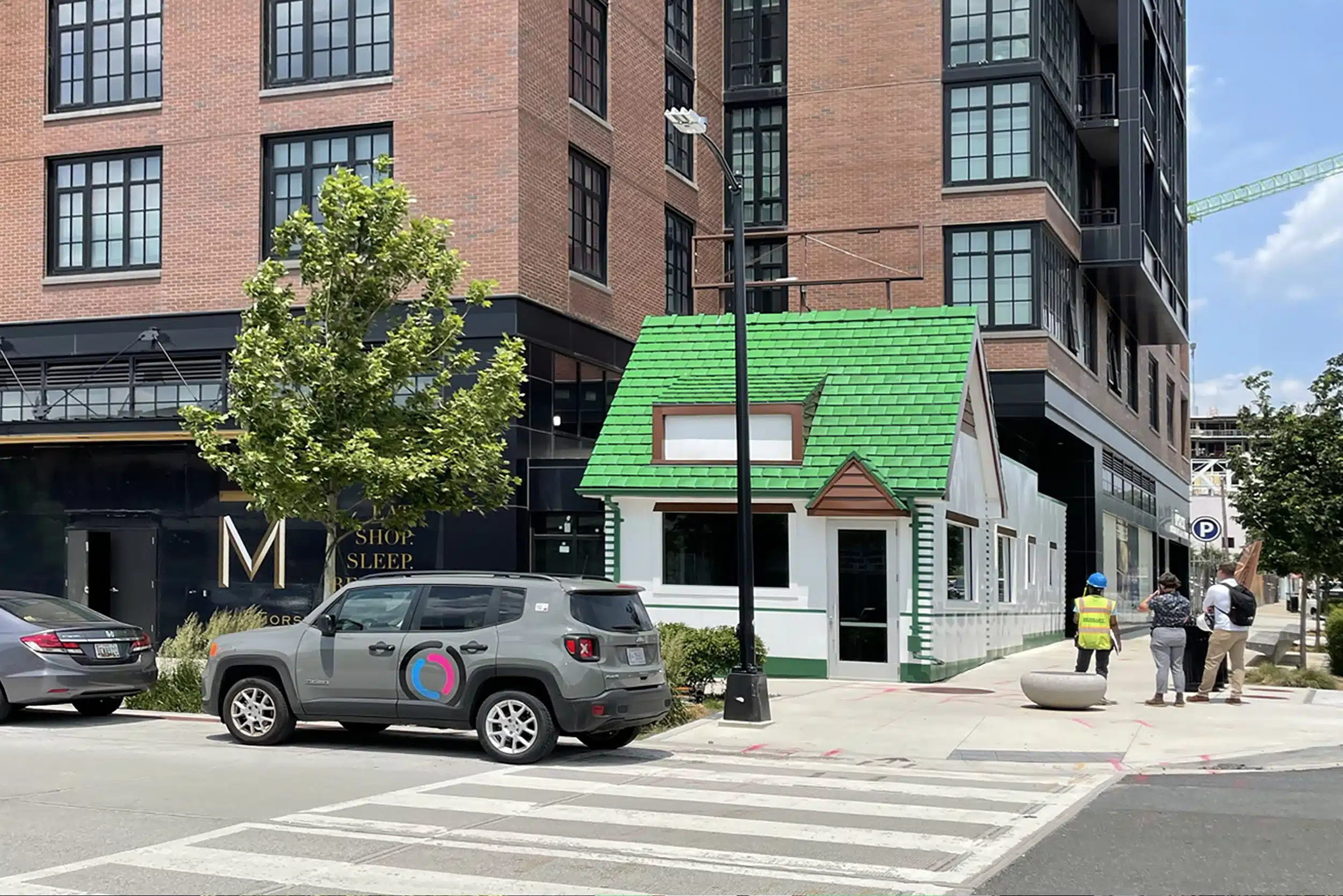
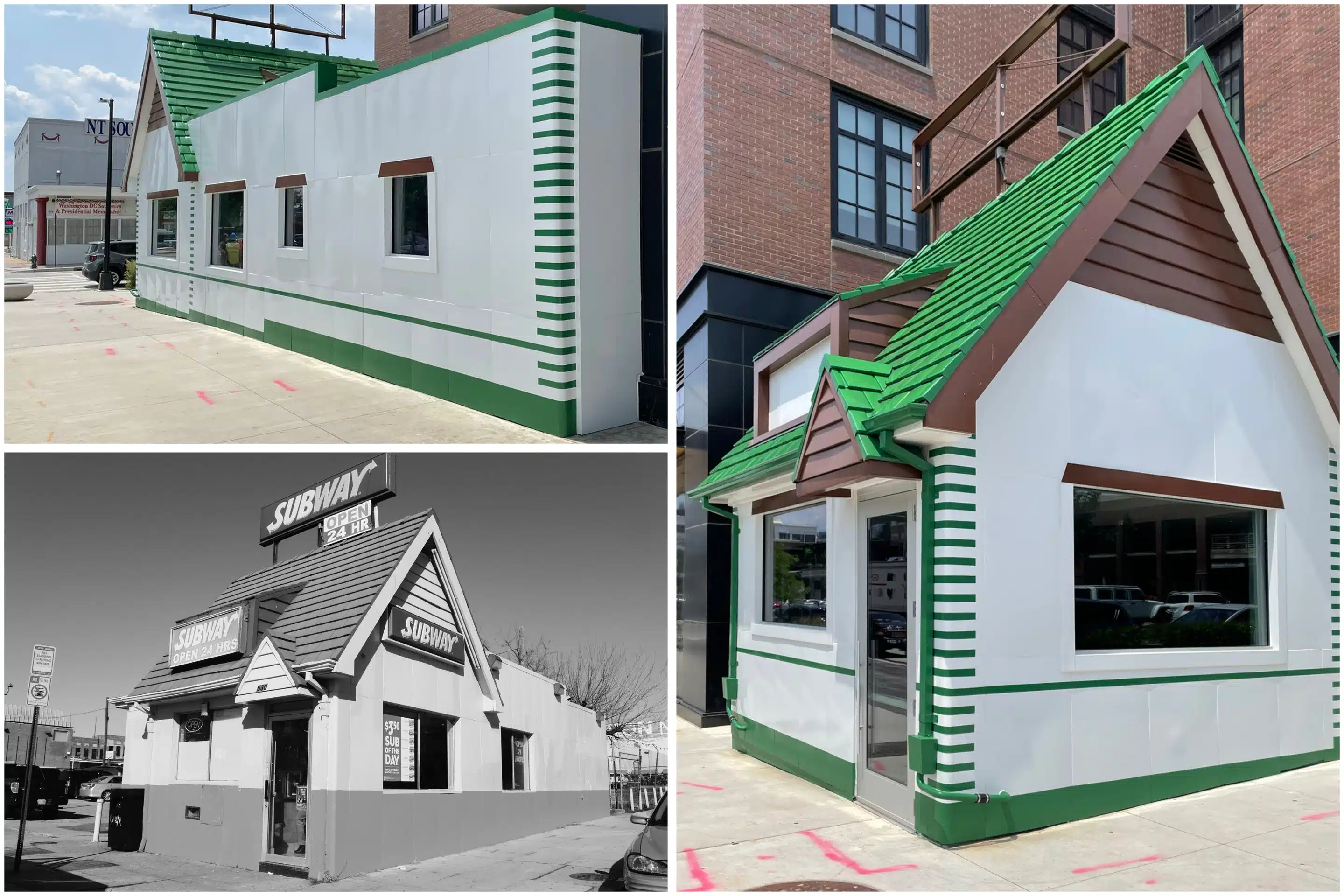
The Little Tavern was a chain of hamburger restaurants, founded in Louisville, KY in 1927, with the first DC Little Tavern opening one year later. By the 1950’s there were approximately 70 locations, many within the metro DC / Baltimore region. Known for their distinctive, quaint, and colorful building designs, the Little Tavern on Morse Street, in DC’s Union Market neighborhood is one of a handful of surviving examples of this iconic early fast food restaurant. The Morse Street shop was the 27th location, completed in 1963.
In 2017, the real estate group LCOR and their architect SK+I designed a mixed-use, 270-unit multi-family project that proposed integrating the existing Little Tavern structure into their proposed design. While the building was not listed on the National Register nor the DC Inventory of Historic Sites, considerable interest on the part of the community as well as the DC Historic Preservation Review Board, necessitated a formal Preservation Plan as part of the DC Planned Unit Development process required for project approval. MV+A was tasked with this scope of work.
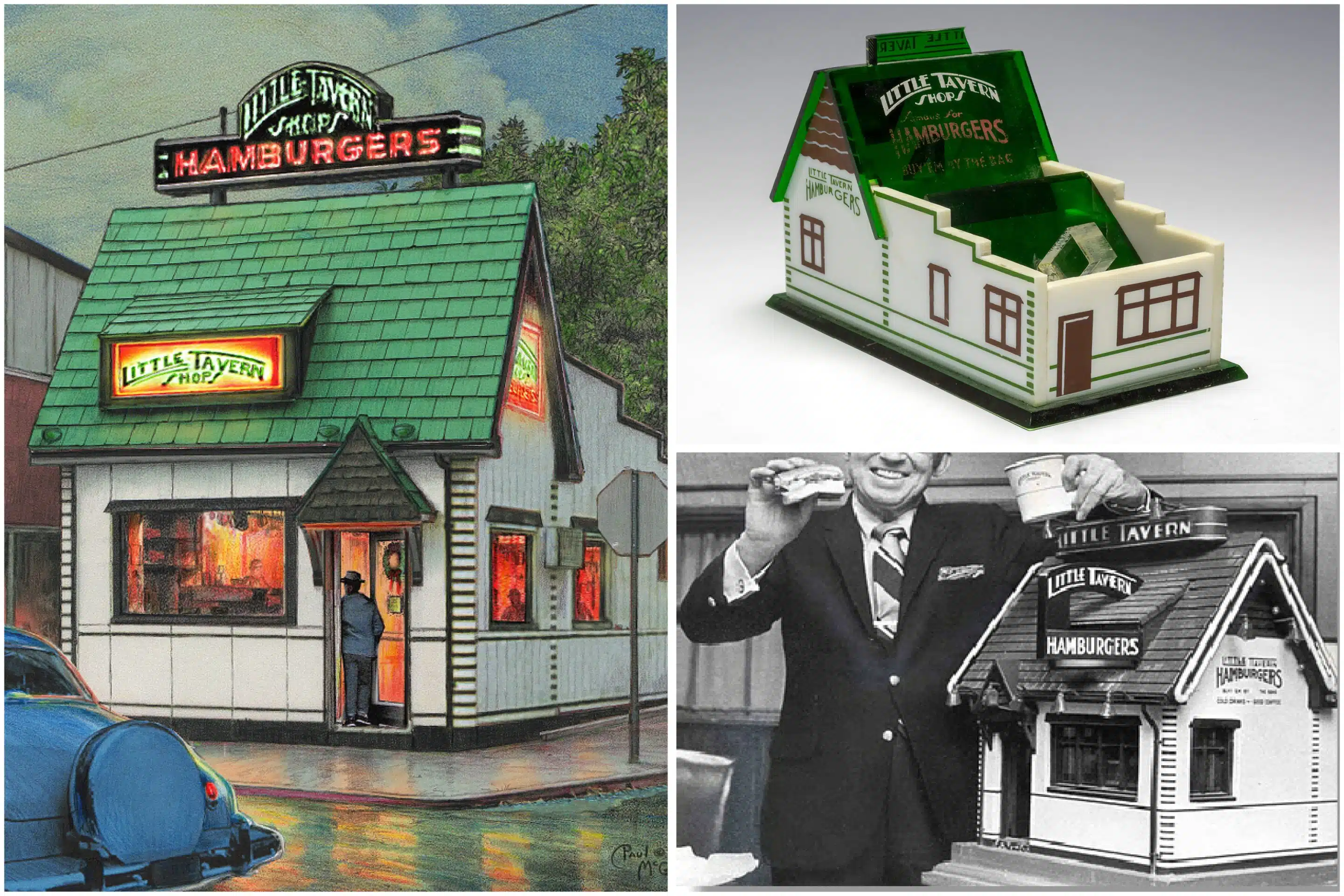
At first glance, the Little Tavern’s Tudor-esque lines and proportions might seem simple and traditional; upon closer inspection they are anything but. As part of a sophisticated method of identity creation in which buildings, menus, uniforms, locations, and food packaging all served to create a distinct and recognizable brand—a strategy particularly common among roadside restaurants and gas stations—the Little Tavern was thoroughly conceived. Between the increasing proliferation of cars and increasing awareness of food safety and public health, porcelain enamel became a popular choice of building material both as an expression of streamlined ‘industrial style’ and clean alternative to ‘greasy spoon’ establishments. As such, porcelain enamel tile was a used extensively for the Little Tavern outside and in.
Unfortunately, a litany of changing tenants [most recently, a Subway franchisee] left the building’s exterior in disarray and buried under many layers of paint and the interior devoid of any of the original tilework. MV+A’s final Preservation Plan presented a comprehensive history of the brand and its remarkable approach to modular construction exemplified by the Morse Street shop, along with a forensic review of the project shop drawings and subsequent recommendations for revitalizing the structure. Additional considerations included planning for temporary relocation of the existing building during construction of the new residential building.
MV+A oversaw the exterior restoration of the Little Tavern, which now opens into the lobby of the new development, and coordinated all reviews with the DC Historic Preservation Office.
717 H Street

717 H Street consists of a group of three adjacent buildings in the DC Downtown / Chinatown Historic District, combined into a single mixed-use commercial building in the late 20th century. The 3-story, gable-roofed Italianate building at 717 H Street NW and the modest 2-story carriage house facing 8th Street NW were both constructed prior to 1887. The 3-story Queen Anne style building at the corner of 8th and H was constructed somewhat later, prior to 1902.
Purchased by L3 Capital, a real estate investment firm focused on prime urban and mixed-use projects, MV+A was charged with both the preservation and architectural project scopes to bring this vacant set of buildings to life. MV+A was able to coalesce a design that respected the character defining aspects of the buildings while creating a fresh new, seamless expression for the trio of buildings.
The design consists of an interior renovation for ground floor retail and upper-level office use, with a rehabilitation of the 8th Street and H Street facades. A new service core housing kitchens, restrooms, an elevator, and two code-compliant egress stairs is located at the rear corner of the building, not visible from the street. A coffee bar is incorporated into the historic lightwell located between the two townhouses. A modern addition is placed above the existing roofline of the carriage house to connect this new service core to the 3rd level of the existing townhouses.
A detailed conditions assessment of both the interior structure of the building and the historic facades was undertaken and documents prepared for restoration of these elements. The original wood frame of the building was also designated as a historic feature, so detailed design documents were required to obtain approval for work needed to establish level floors across the building where the existing has as many as four levels on a single floor.
Additionally, being located within the Chinatown Historic District, elements of Chinese characters and designs had to be incorporated into the historic facades. Future tenant signs will address this and the new office lobby entrance on 8th Street includes a decorative screen that integrates Chinese character motifs with varying arrangements of the numbers 717.
This project received unanimous approval from the DC Historic Preservation Office, DC Historic Preservation Review Board, and the Chinatown Design Review Committee.
 717 H Street | Lower Right: Before | Left + Upper Right: Proposed
 717 H Street | Plans: Ground Level Retail and Upper Level Office Spaces
 717 H Street | Interior Before
 717 H Street | Interior Proposed
 717 H Street | Section + Rendering with Chinatown Signage
 717 H Street | Project Exterior Restoration Details Sheet