
CODES, COSTS + CRAFT: Sticking up for Stick-Built, Pt. 2
As noted in Part I of this series, a majority of the criticism directed at the current inventory of stick-built multifamily projects is in the arena of aesthetics. The most common refrain is: “Why do all new apartment buildings look the same?” [Curbed | Dec. 2018].
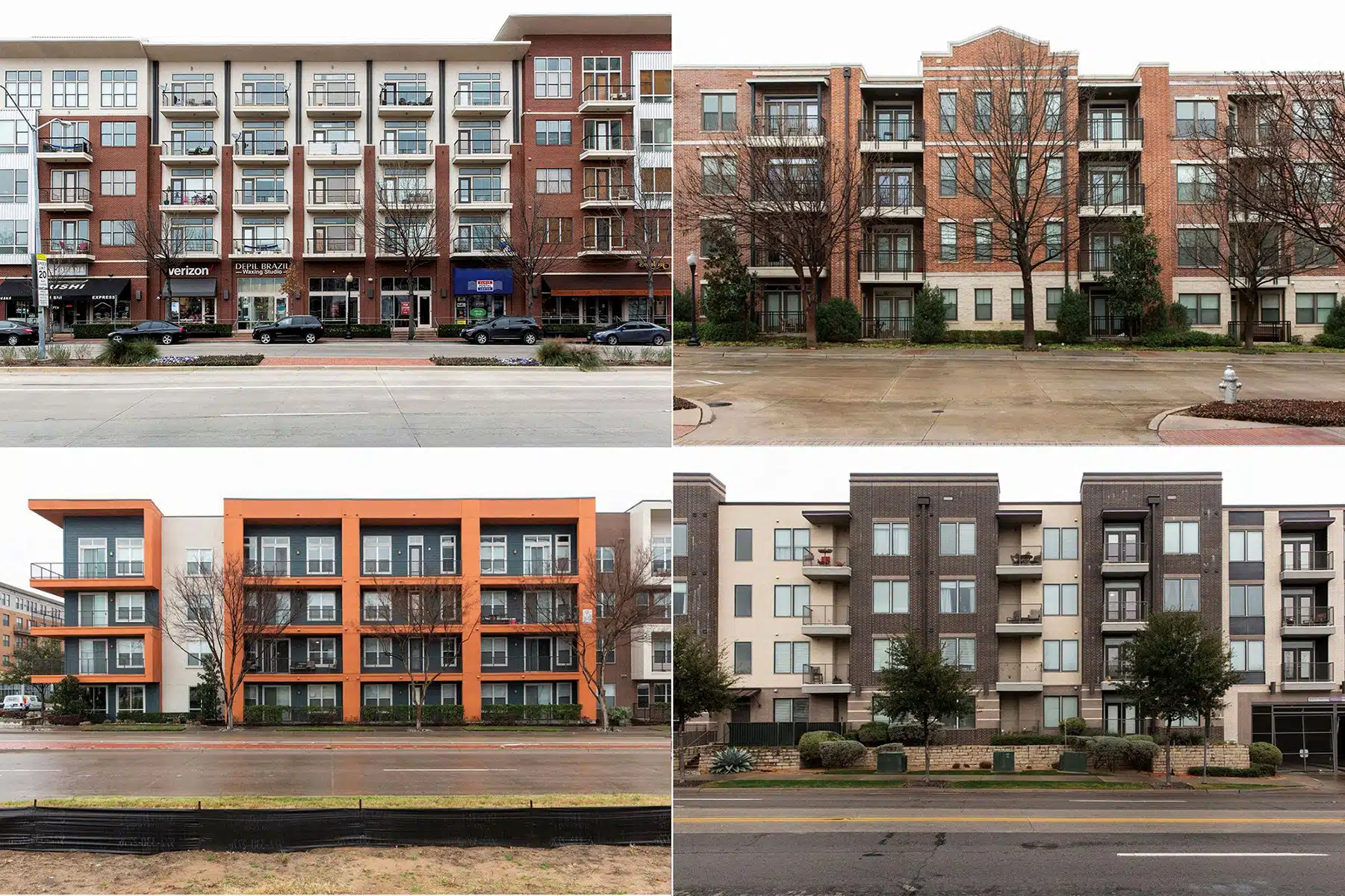 Examples of Recent Stick-Built Multifamily Buildings | Source: Bloomberg Businessweek
The majority of stick-built multifamily buildings are 50+ units in size [60%], and consequentially present genuine challenges to addressing scale and materiality, especially within a context of an existing low or mid-rise neighborhood. In response, many planning authorities and development stakeholders push for buildings above a certain size to present an overall massing that has been composed as a series of more ‘appropriately scaled’ architectural forms. While this approach may seem preferable, it can also lead to a confusing expression of building facades that do not actually correspond to the design principles of those architectural forms which they were intended to evoke.
At MV+A, we have completed numerous stick-built multifamily projects—most exceeding 100+ units. Our approach has always been rooted in contextualism, guided by principles of traditional architecture and building, and our ability to build consensus with local planners, community groups and developers to provide solutions tailor made for a site.
77 H Street | Washington, DC
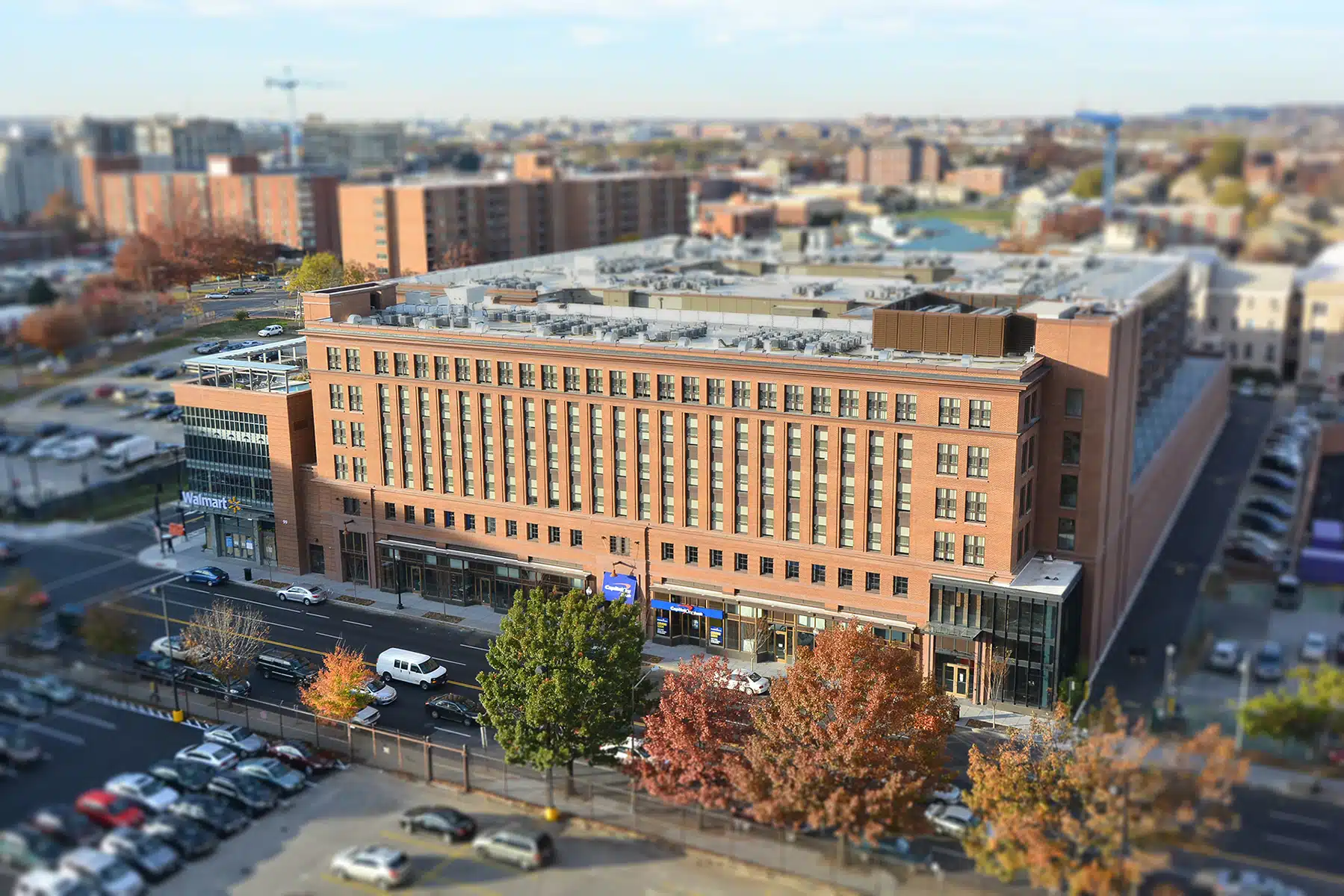 MV+A | 77 H Street | Completed in 2015
When it comes to the challenge of managing a large building volume, the approach should not be to simply make the building appear smaller; large buildings are a reality and not an inherently a bad one. This is especially the case when working within a dense urban context like downtown Washington, DC. As urbanists, we understand the importance of balancing scale and density with a clarity of architectural expression in the pursuit of coherent, context-sensitive solutions. For 77 H Street, MV+A had the task of deploying an ambitious building program within an urban context very much in need of a structured ‘re-coupling’ with the neighboring retail districts—namely Chinatown / Gallery Place to the east and the H-Street Corridor to the west.
One of our most recognized skillsets at MV+A is our experience with managing large-format retail programs within the mixed-use multifamily equation. For 77 H Street, rather than attempting to limit or obscure the architectural expression of such a retail program, we opted for a more focused and integrated approach. One that appropriately celebrates the varying program scales and disposition in the service of creating a dynamic streetscape experience—bookended by the building’s two major retail and residential entrances. Each of these elegantly glazed entrances have been detailed as counter points to the surrounding expanses of brick façade.
While no less thoughtfully composed, the facades provide a continuity of street wall whereas the jewel box entrances present visitors and passers-by with the element of surprise; especially after dark when the shimmering reflections from the residential pool—strategically placed atop the anchor retail—can be observed high above the Walmart marquee.
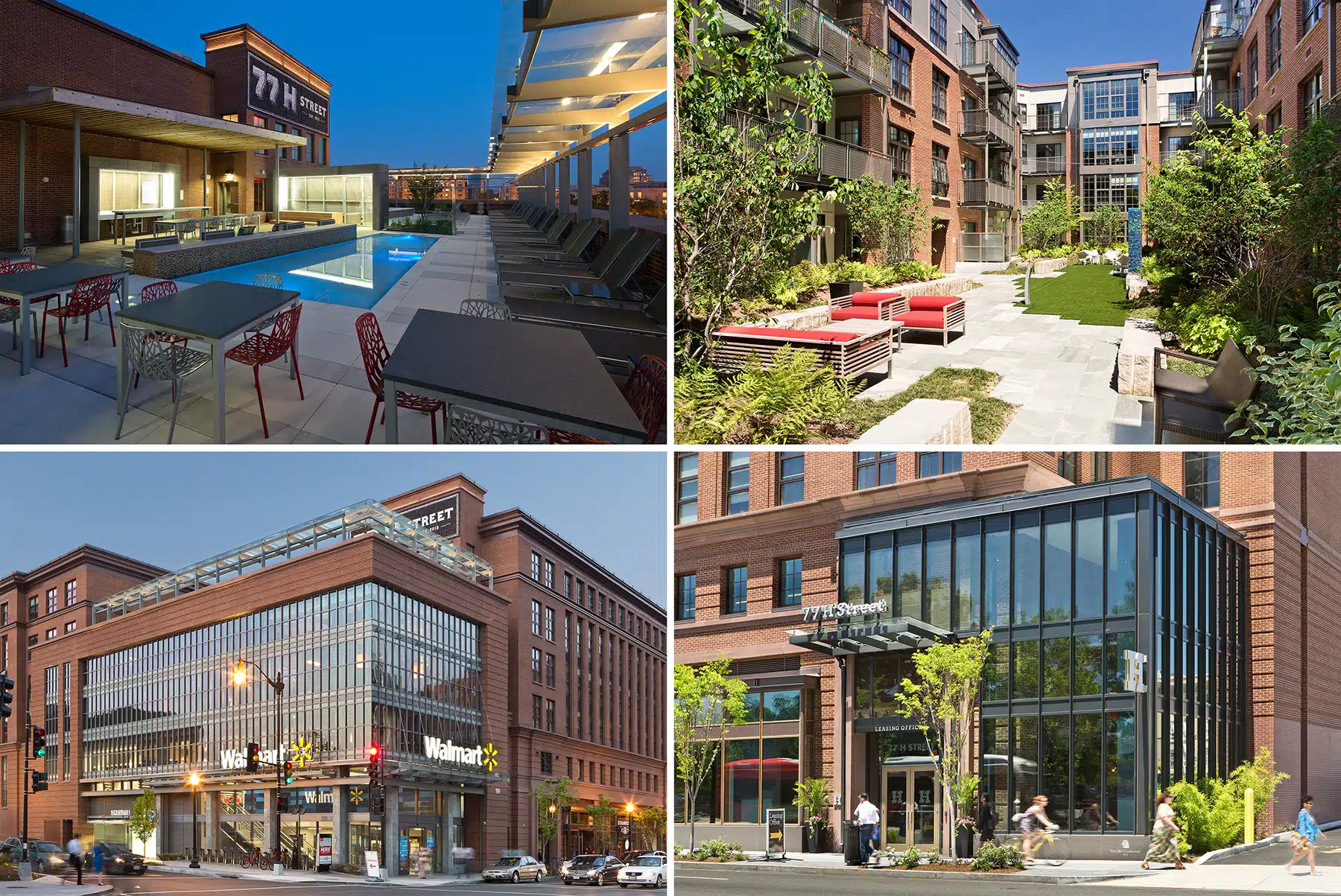 MV+A | 77 H Street | Completed in 2015
The Edmund | Reston, VA
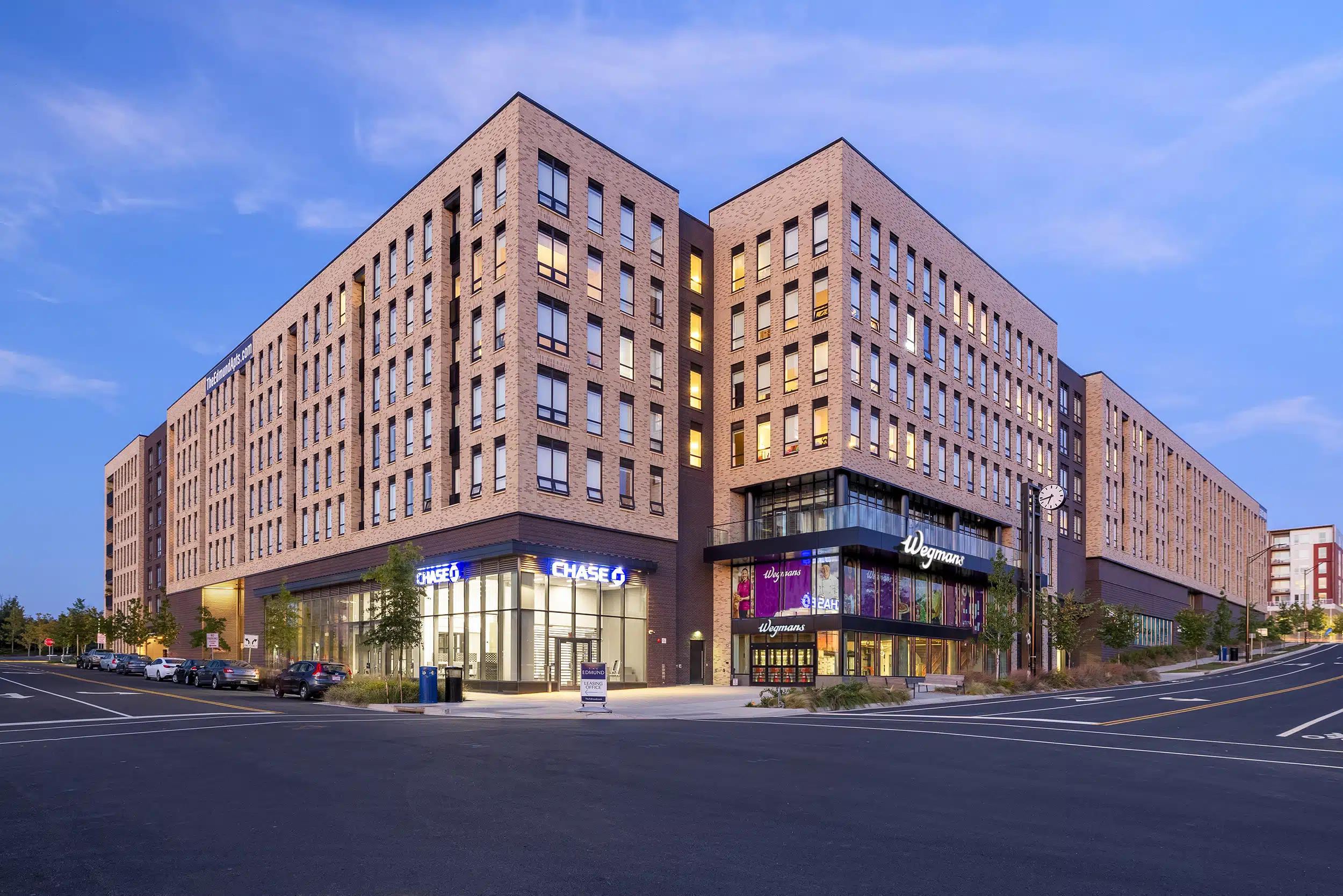 MV+A | The Edmund | Completed in 2022
Some of the challenges with stick-built construction are not all that different from other construction types. Take for instance, load bearing masonry and the problem of stepping back volumes as they rise. This was not traditionally done in many historic buildings. Limitations on the size of openings were challenges that needed to be overcome with many traditional masonry structures. Most successful traditional buildings dealt with scale challenges not by deploying a range of disparate architectural ideas and material treatments, but with more subtle changes in massing, material detailing, and fenestration.
At The Edmund, MV+A had the challenge of combining a nearly 100,000 sf, Wegmans and additional inline retail with 353 apartment units above. In an effort to break down the mass of the long facades, MV+A opted for a restrained palette utilizing two primary aesthetic expressions: a lighter brick residential exterior above interrelating with a darker brick retail exterior below. Breaks in the residential massing coincide with important moments for the retail program beneath, such as the location of retail parking entrances. In most instances the lighter residential expression perches above the darker retail expression below, but is allowed to hit the ground as key moments such as the main corner for the grocery entrance and public balcony—creating hierarchy for this key moment for the building and the project.
In creating a simple rhythm of identical windows and balconies, the architecture achieves a visual calmness and balance, and avoids the clutter and chaos that challenges many large buildings that deploy too many architectural, and material moves. Subtle, recessed balconies create a rhythm of shade and shadow to animate the façade and create depth. The scale of the building is effectively broken down while still reading as a cohesive statement throughout, and does not pretend to be something that it is not.
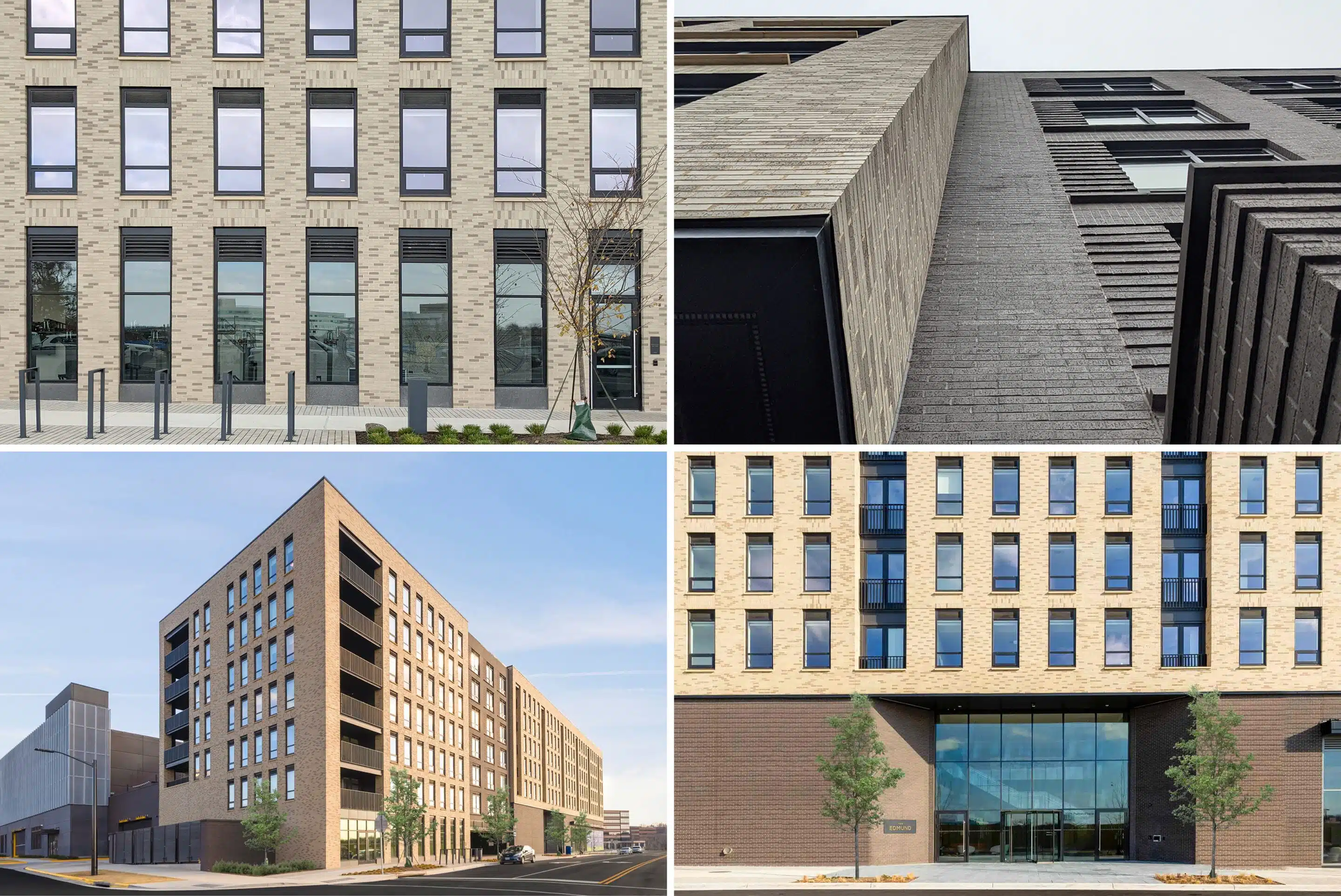 MV+A | The Edmund | Completed in 2022
The York | Towson, MD
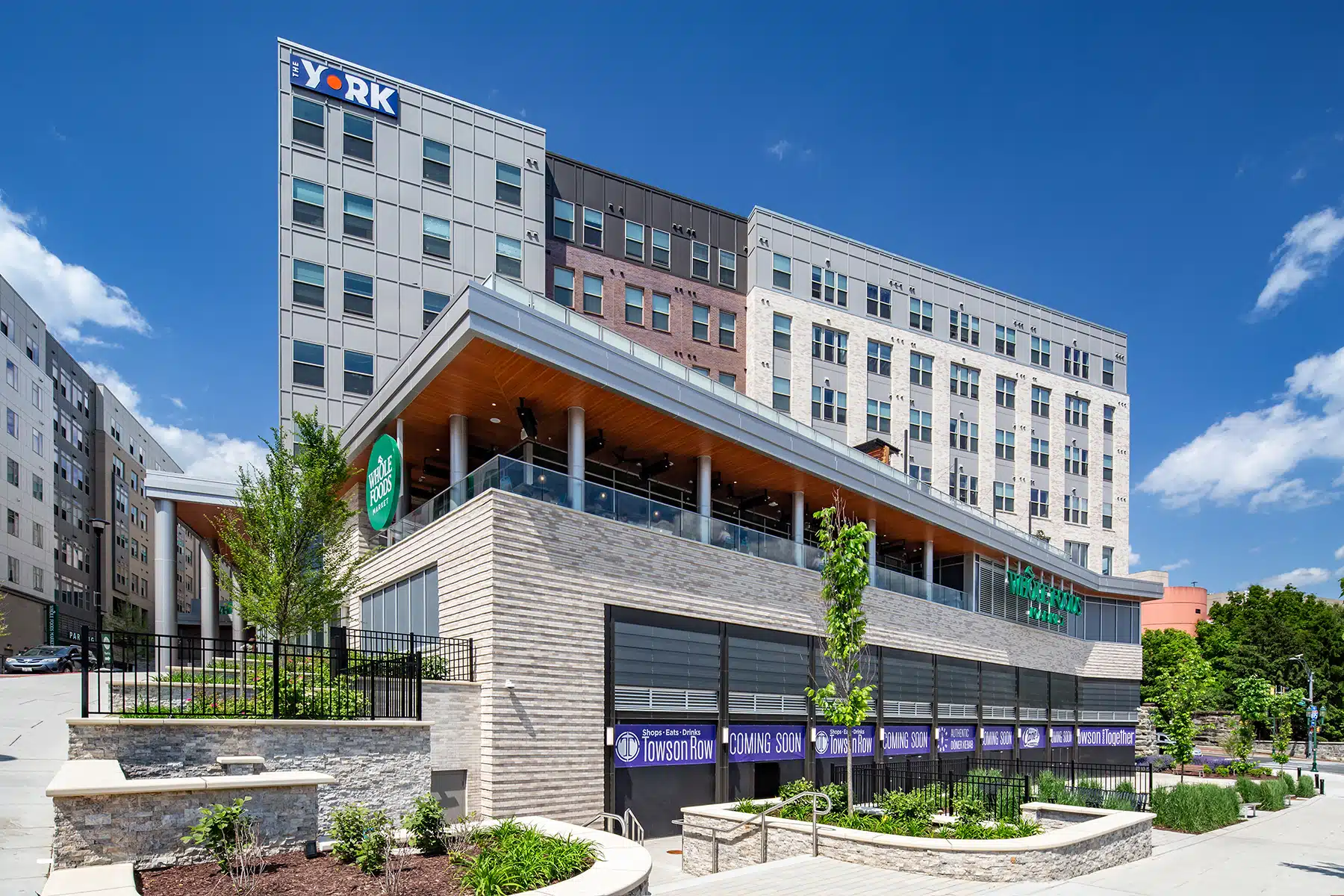 MV+A | The York | Completed in 2021
In many ways, the York at Towson Row exemplifies MV+A’s approach to grocery-anchored, mixed-use development as a means of supporting and transforming urbanizing areas and struggling downtowns into sustainable and resilient neighborhoods with access to fresh food and other much needed amenities.
Within this context, stick-built / podium construction is crucial to contending with certain economic realities while affording remarkable adaptability vis-à-vis a well-informed approach to podium design. As with most of MV+A’s stick-built / podium projects, the York’s podium has been developed to achieve a wide variety of outcomes. With a north-to-south change in grade of 25-feet, this podium manages to resolve multiple circulation challenges—pedestrian access to anchor and inline retail, access to retail and residential parking, retail service access, and residential front / back of house access—while maintaining a positive, pedestrian streetscape experience. This is achieved through a painstaking strategy of layering and stacking building programs to optimize efficiencies; a hallmark of MV+A’s mixed-use expertise.
Oftentimes with stick-built / podium buildings, there is a tendency to obscure the discrete reading of a ‘podium’ in favor of a uniform façade. While there are many instances where this may prove the most appropriate approach, there are many opportunities for celebrating the podium while still ensuring its successful aesthetic integration.
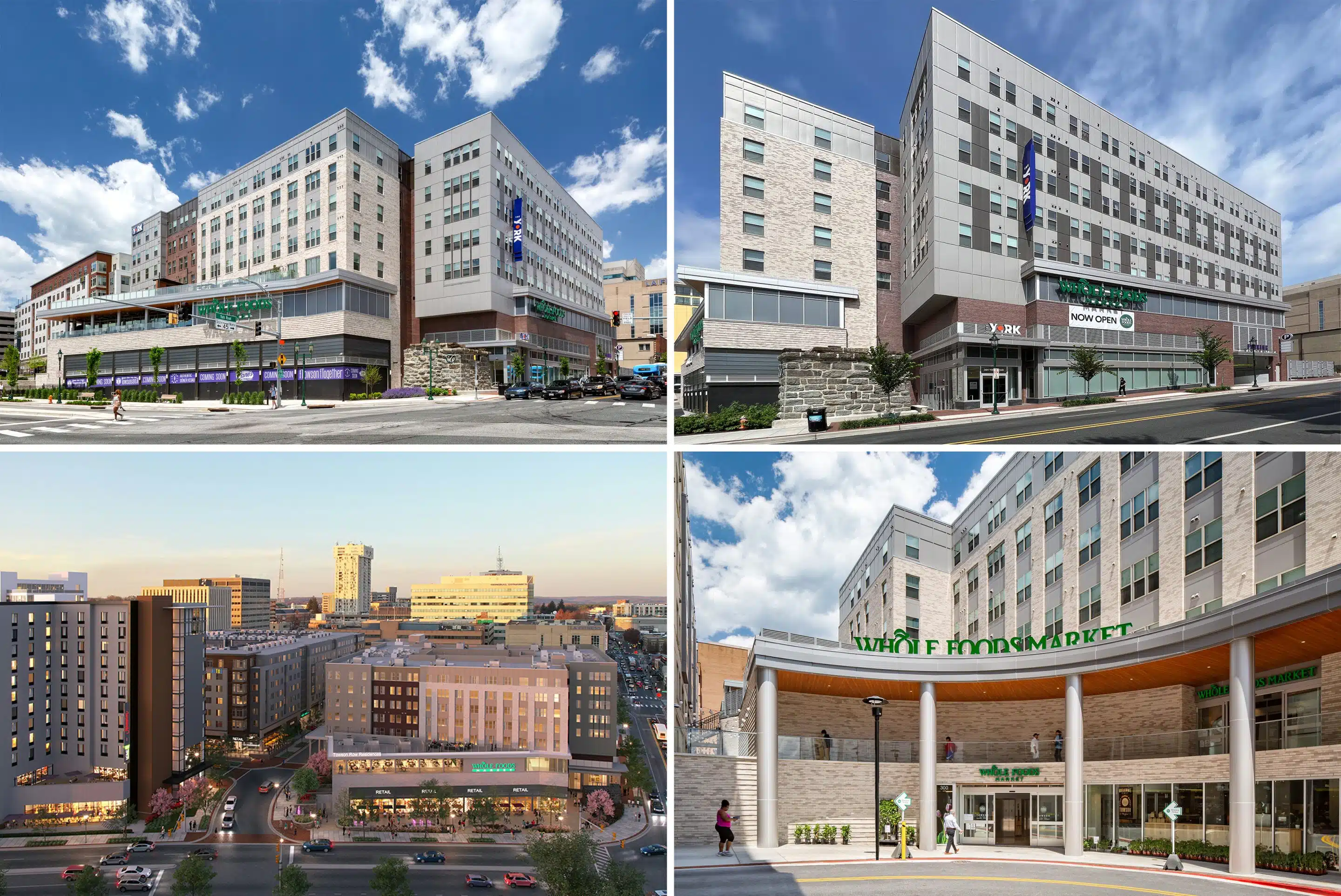 MV+A | The York | Completed in 2021
Ultimately we strive for authenticity in our work. We strive for buildings that will be timeless and create visual interest through intricate detailing of materials as opposed to trendy color or material choices that run the risk of feeling dated in the future. Perhaps most importantly, we are dedicated stewards of the ground plane, ensuring that the building-pedestrian interface is a thoughtfully crafted and curated experience. Independent of a project’s method of construction, every building presents an opportunity to contribute to the life of a place. It is with this conviction that MV+A will continue to embrace and innovate within the stick-built construction type.