
RETAIL REDUX: ReFresh | ReNew | RePostion
At MV+A, retail is in our DNA; time and again it has been our retail expertise that has led to our most ambitious, mixed-use commissions. That said, we still get plenty of opportunities to help our clients with their various in-line retail challenges.
A wide range of circumstances can inform any given Owner’s decision to upgrade a property. For successful developments, tenant retention and lease negotiation loom large. New ownership is a common impetus as is the desire to attract new and more diverse tenants. Changing market demographics and patterns of development can also have profound implications for a property’s continuing success. There are also many variables that affect the success of a retail development. From visibility, access—vehicular and pedestrian alike, and security, it is a puzzle of moving parts. Ultimately, placemaking is at the heart of all successful retail development. From pure in-line arrangements to ‘town centers’, creating a welcoming, safe, and vibrant destination involves a lot of thoughtful planning and creative problem solving.
TRAVILAH SQUARE | Rockville, MD
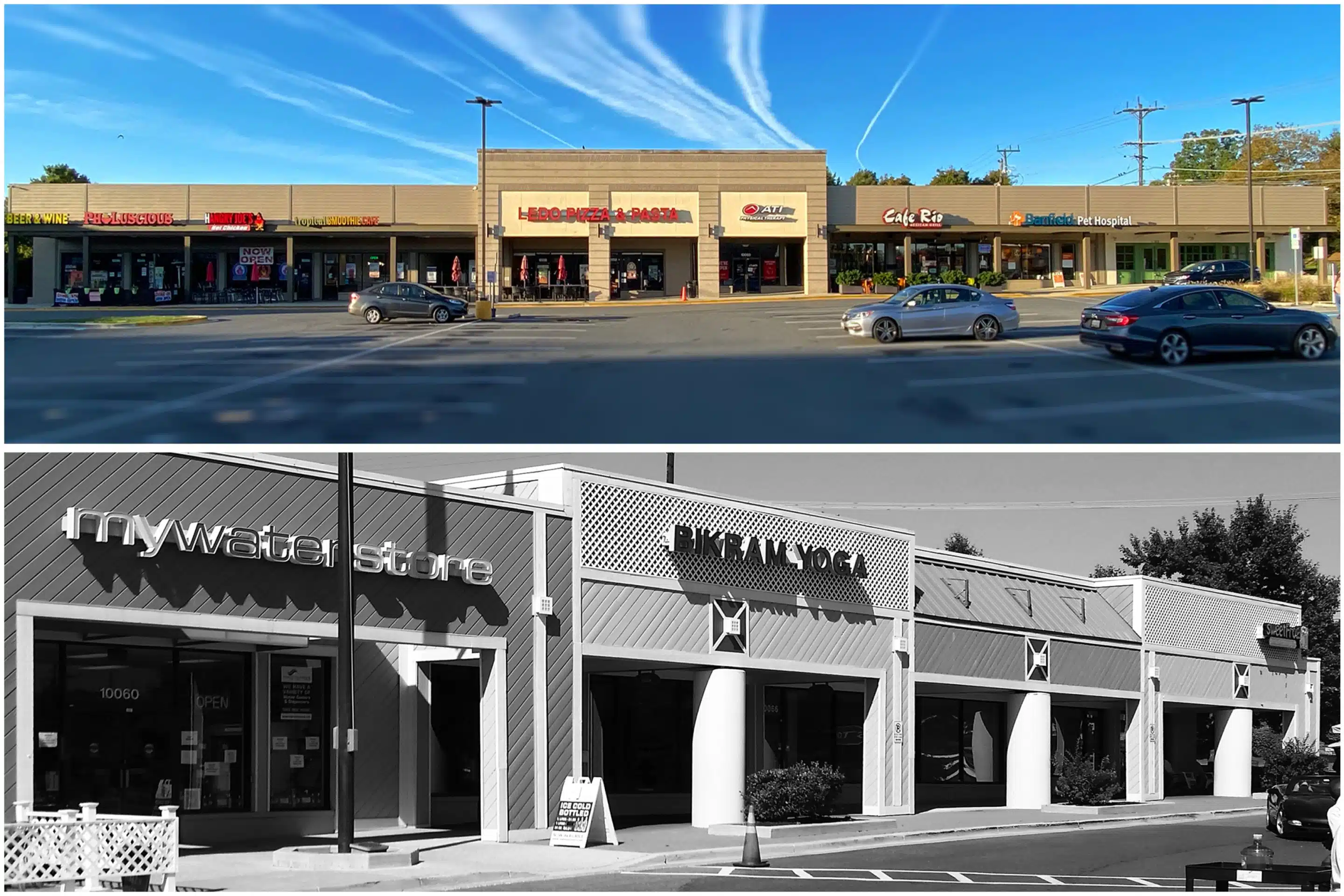 Top to Bottom: Travilah Square | ‘After’ and ‘Before’ MV+A Renovations
The renovations at Travilah Square were carried out in tandem with a new building for Trader Joe’s—replacing two smaller, free standing buildings located on the northwest edge of the site. While the two smaller structures previously obscured full visibility of the main retail buildings from the busy commercial roadway, their orientation on the site afforded sufficient view corridors that would be eclipsed by the new Trader Joe’s. This provided the opportunity to create a new, consistent building aesthetic that would coalesce the development as a singular destination.
As with many similar retail projects, Travilah had undergone an earlier renovation that was largely cosmetic with inconsistent building features scaled, presumably, in line with insitu tenant layouts and clad in a contrasting mix of diagonal wood siding and wood trellis applique—all painted in rather dated hues of aquamarine, beige, and white. As the client was looking for something more contemporary, with a focus on durability, a material palette of brick, steel, and Hardie plank siding was developed as a strategy for unifying all of the buildings within the development.
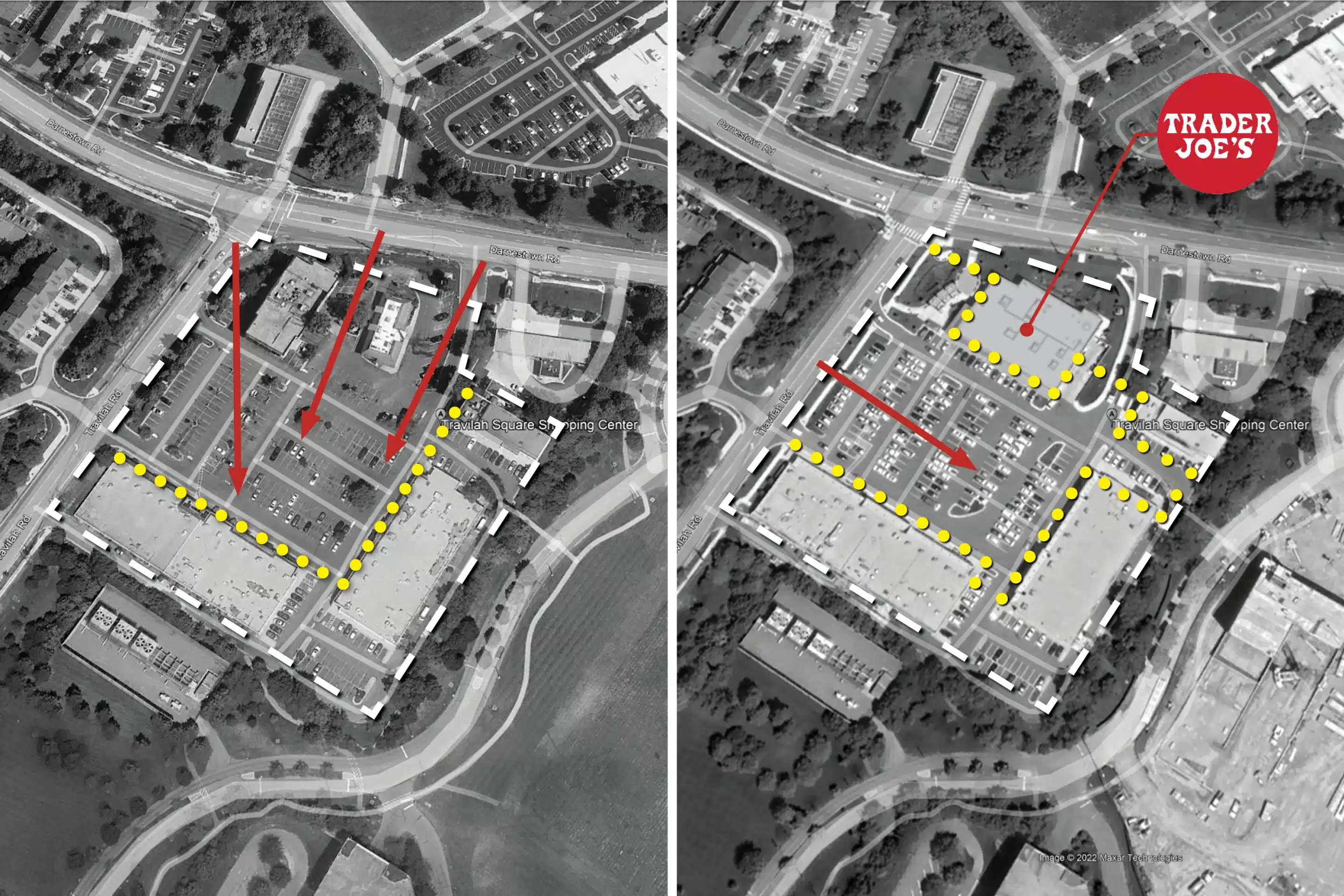 Left to Right: Travilah Square | Aerials 2016 / 2022
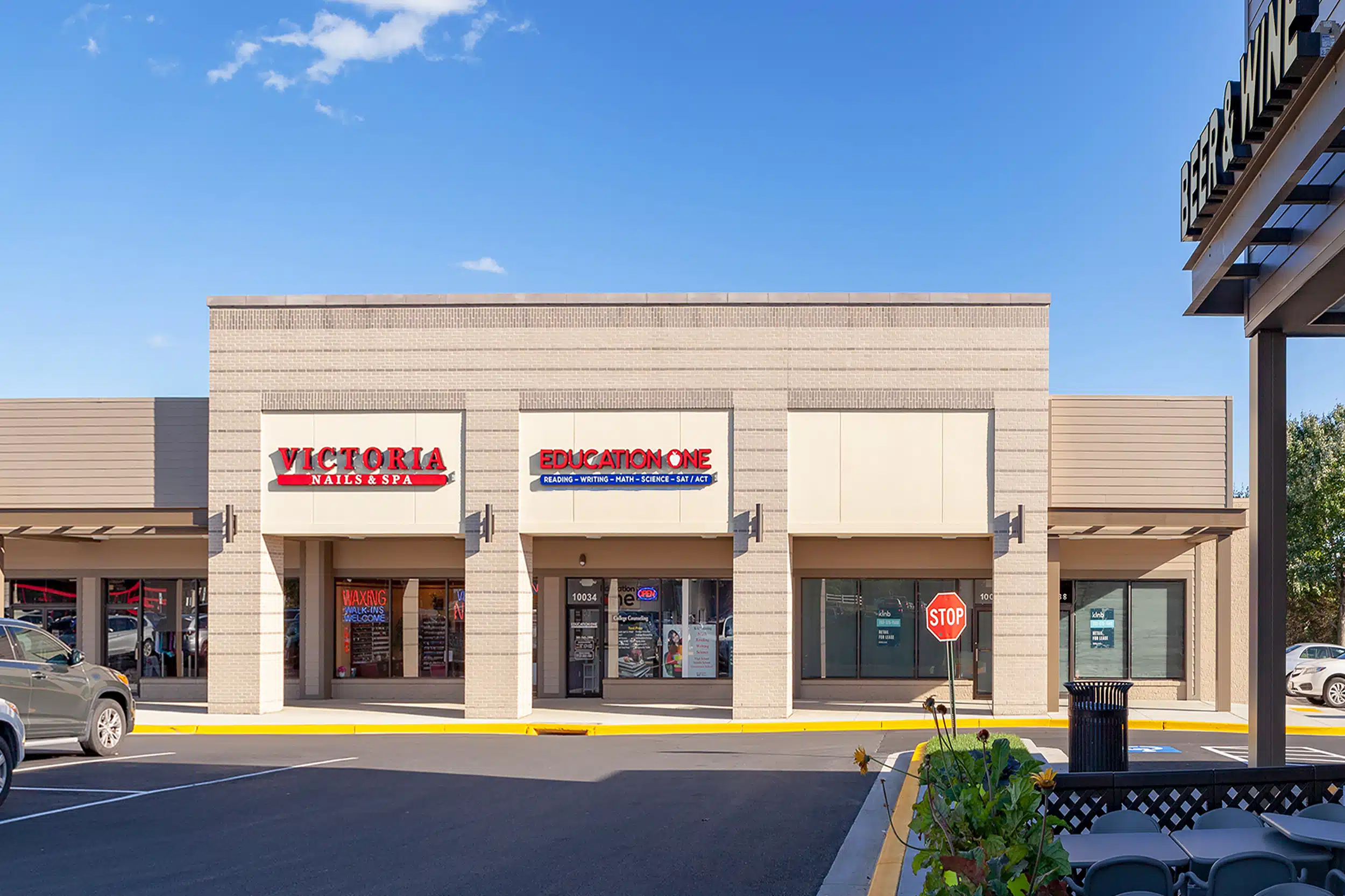 Travilah Square | Unifying Material Palette
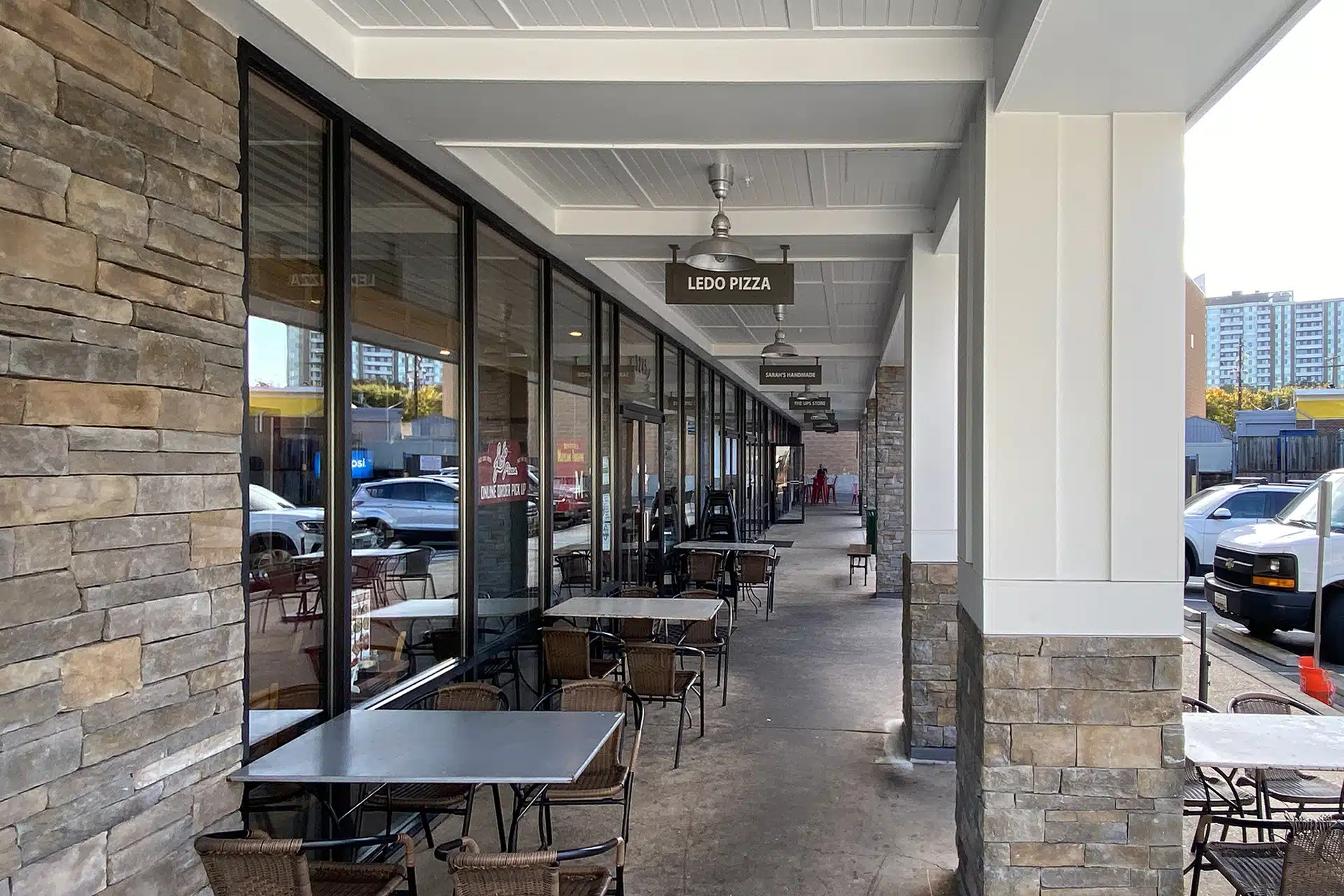
 Travilah Square | Restaurant with Arcade Seating
 Travilah Square | Arcade Views—Upper Right: ‘Before’
BROADDALE VILLAGE | Falls Church, VA
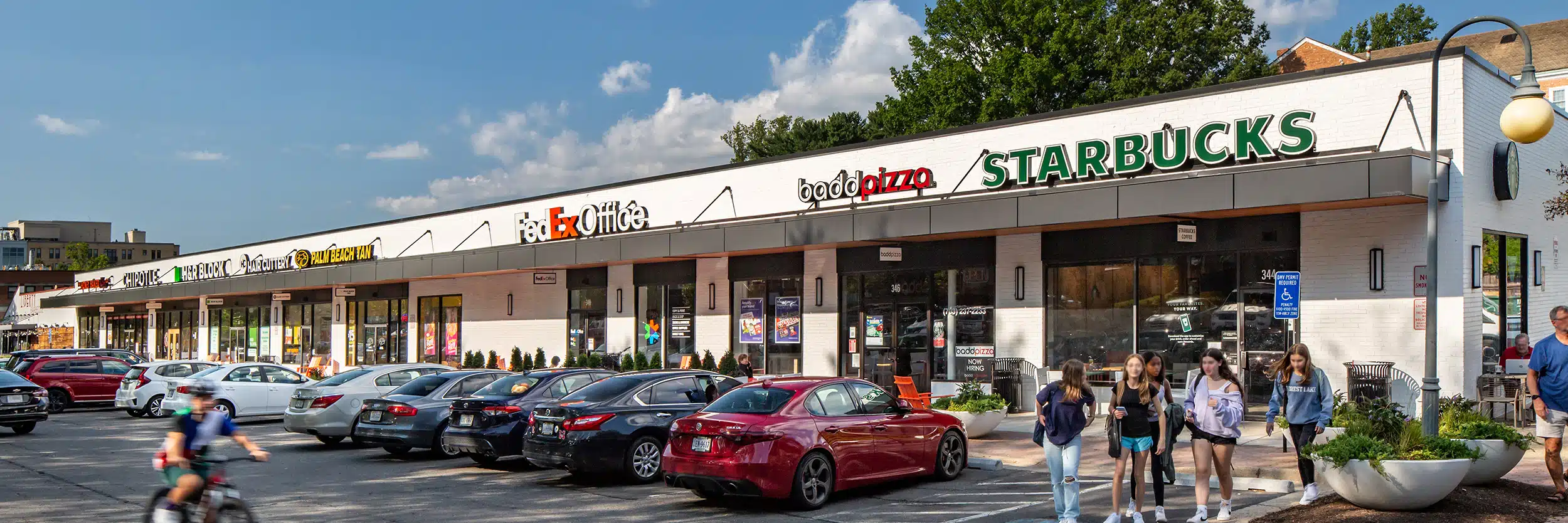
 Top to Bottom: Broaddale Village | ‘After’ and ‘Before’ MV+A Renovations
At Broaddale Village, we were fortunate to work on a building with great bones. As with many previously renovated buildings, our architectural predecessors apparently overlooked the merits of the building, opting to install an elaborate canopy system requiring a series of outboard steel colonnettes—adding an unnecessary layer of busyness to the building while also impeding pedestrian circulation from the parking area.
As a fully occupied, and very busy retail development, all work had to be done with minimal disruption—especially with regard to any modification to the building structure. Fortunately, the existing building structure was more than adequate to support a robust new canopy. Likewise, the original brick was in great condition and easily refreshed with quality paint job. With removal of the colonnettes, the wider sidewalk afforded additional space for MV+A designed site furnishings, making for a more vibrant pedestrian experience and bolstering the appeal of Broaddale Village as a retail destination.
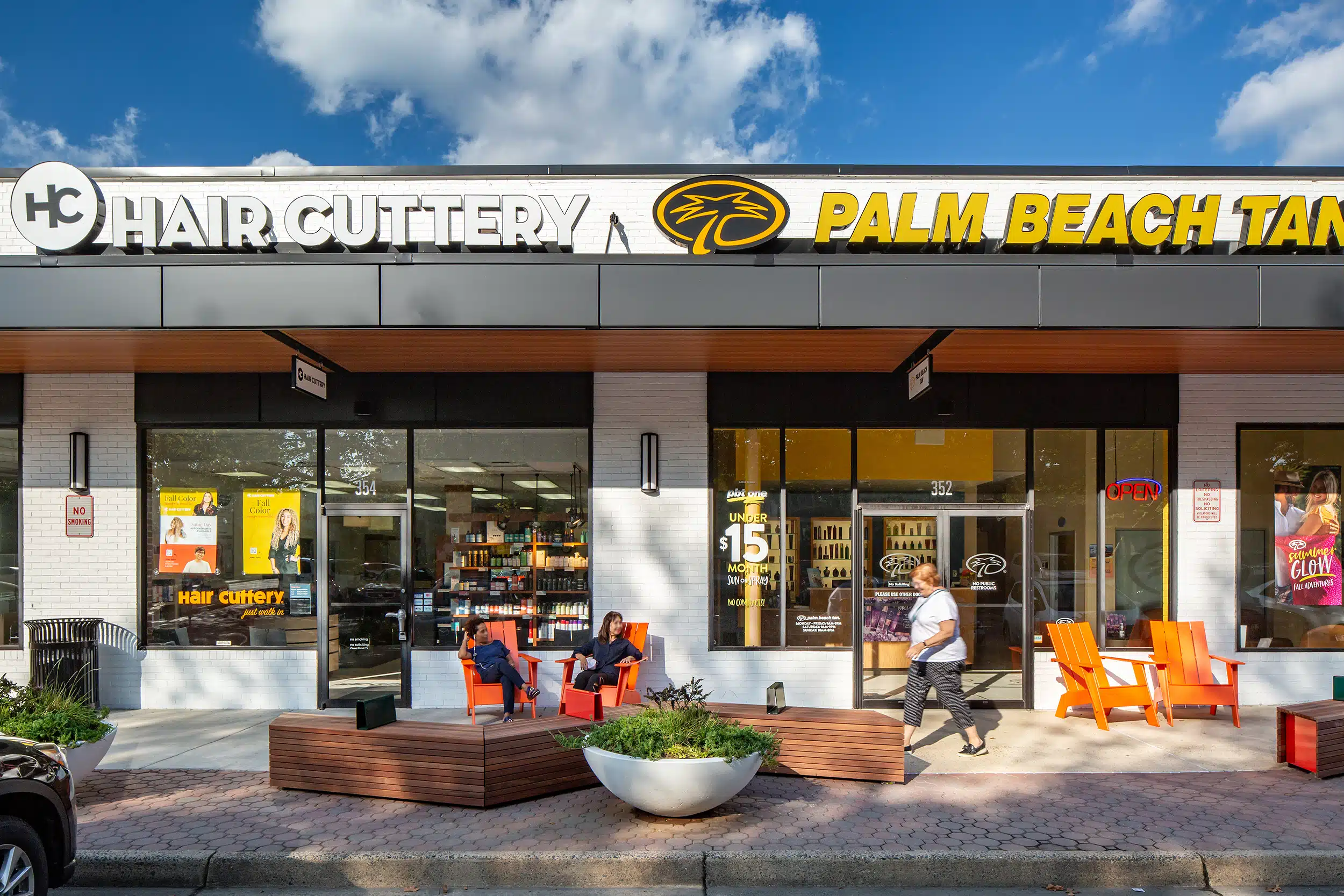 Broaddale Village | New Storefronts
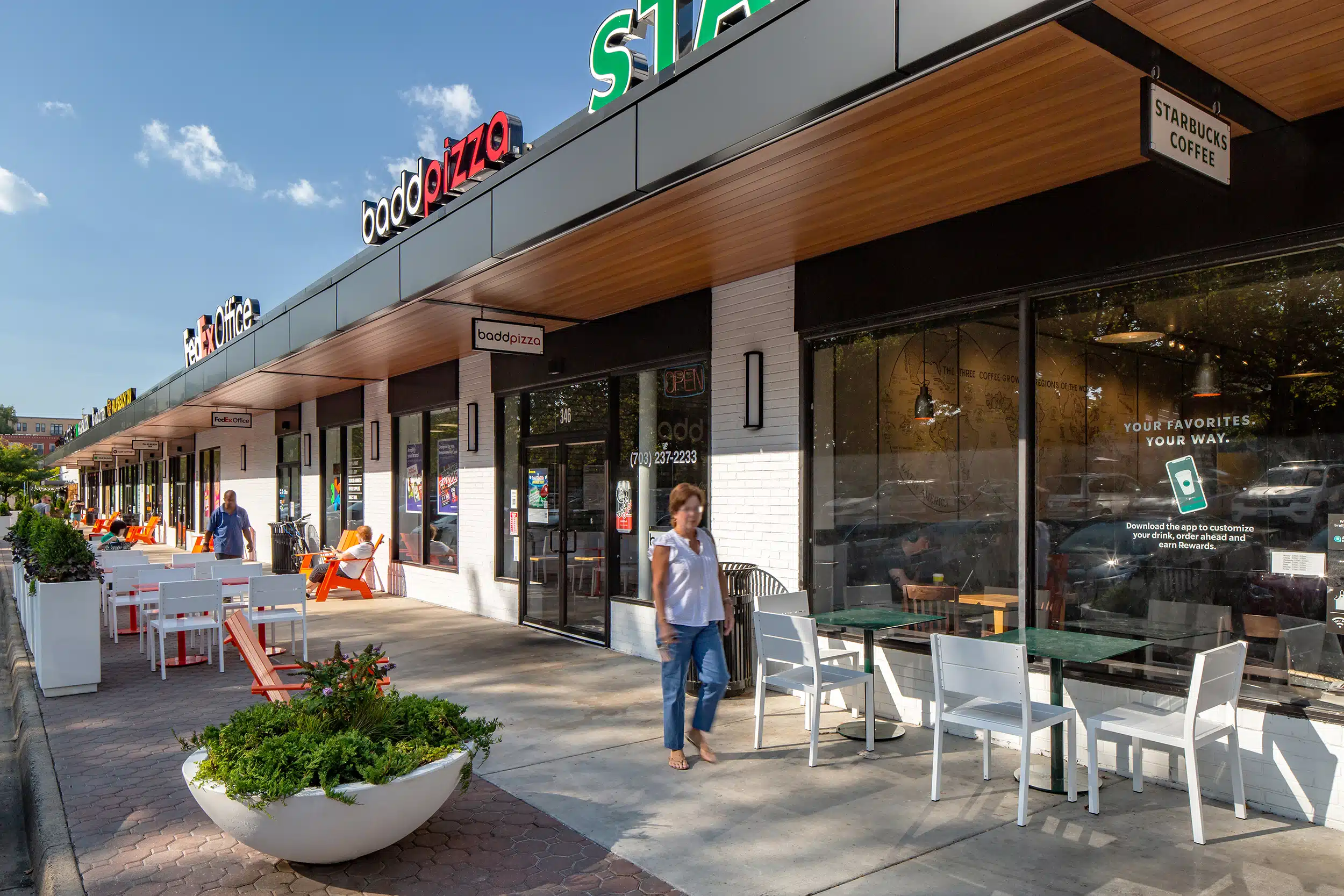 Broaddale Village | New Storefronts
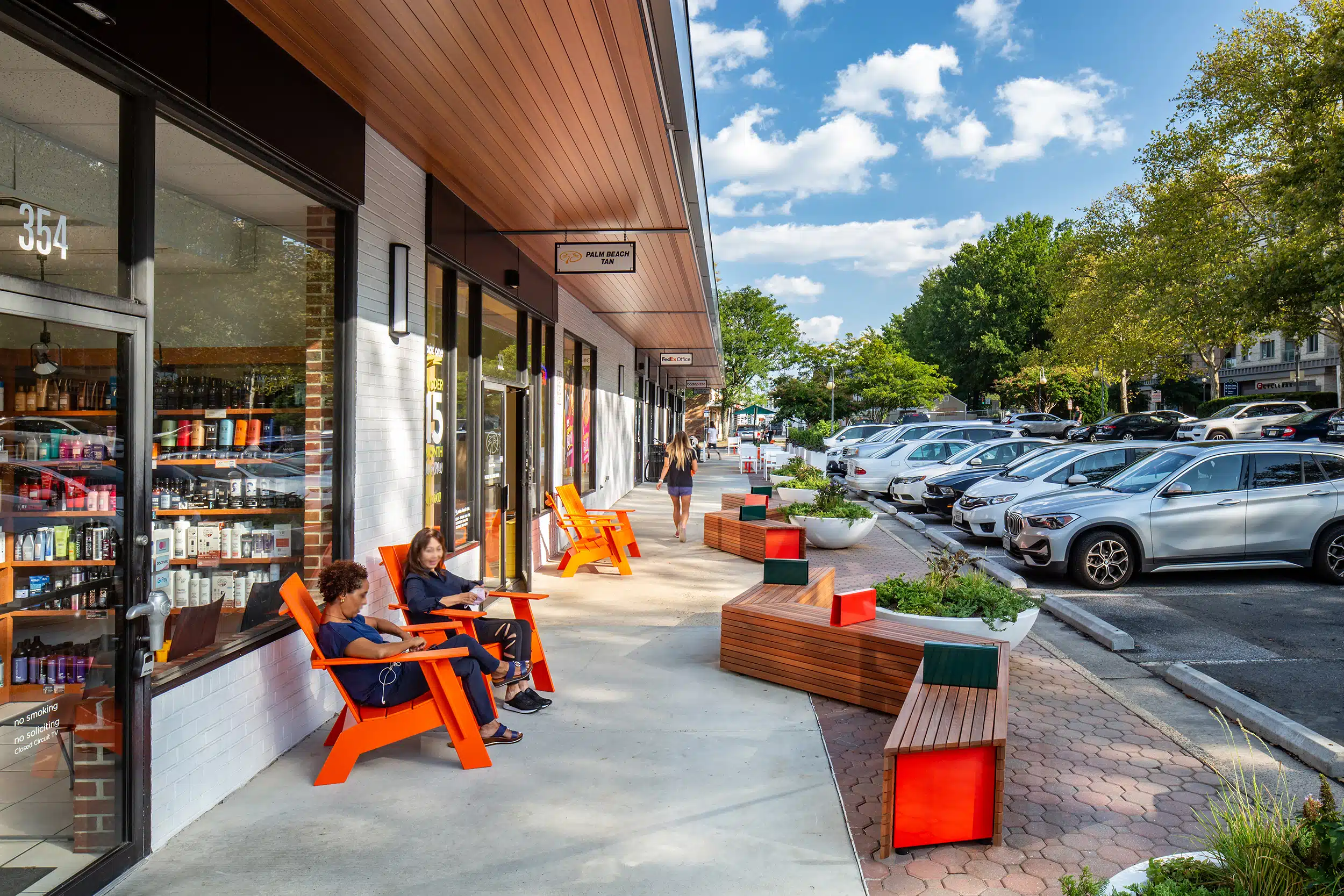 Broaddale Village | New Storefronts
KENWOOD STATION | Bethesda, MD
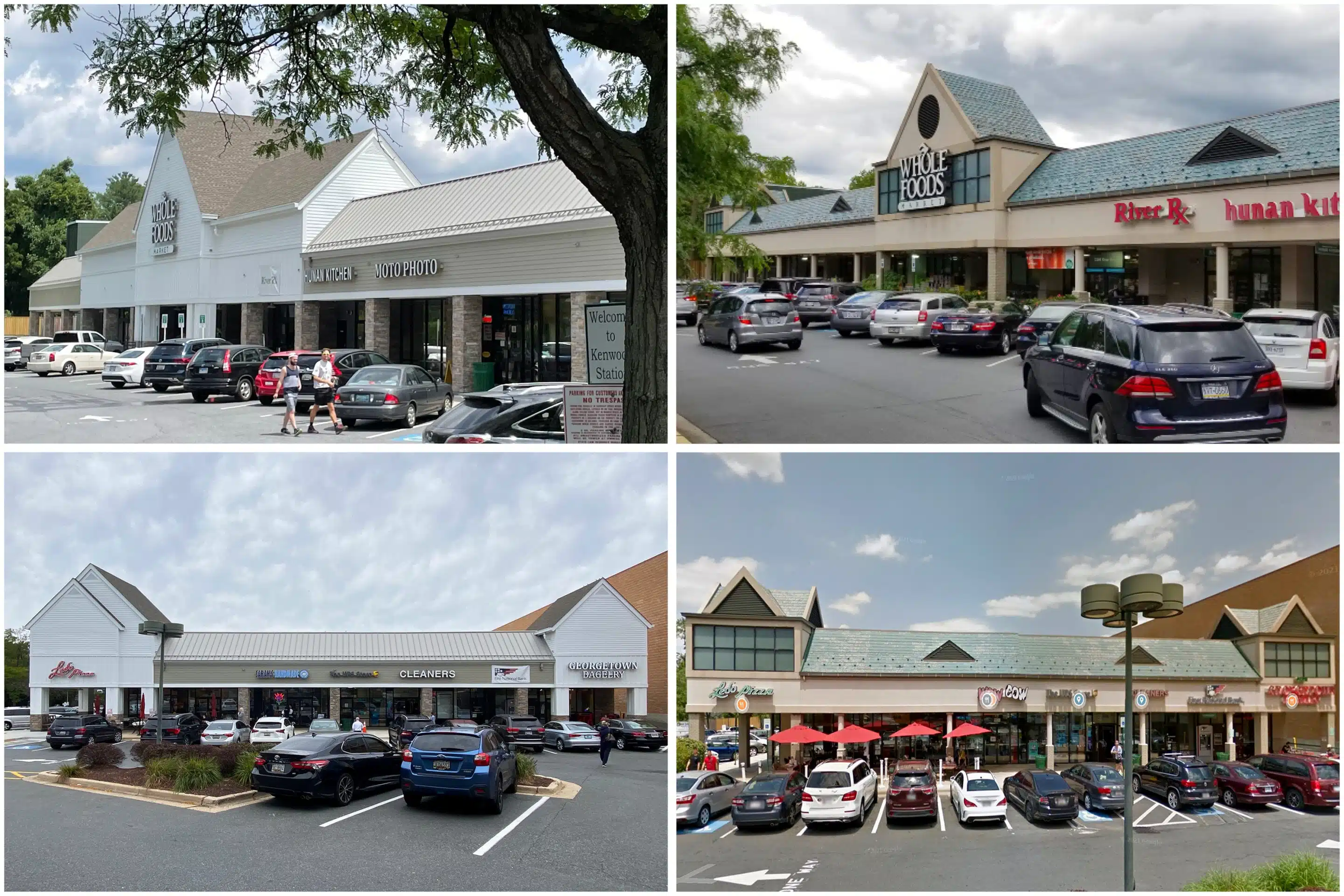 Left to Right: Kenwood Station | ‘After’ and ‘Before’ MV+A Renovations
Kenwood Station, was developed in 1990 from a former bowling alley. The long-span steel structure was deemed ideal for an anchor grocery tenant, and in the interim has become the highest grossing [per SF] Whole Foods Market in the US. Given the development’s success, the dark and dated 90’s edifice was in serious need of a major make-over.
The communities in and around Bethesda are known for their long-established housing stock; well crafted homes, rich in material expression with classic lines and vernacular forms. Thus the aesthetic direction for the project sought to parlay this contextual reality with a material palette of quality, durable, low-maintenance materials. In reconfiguring the existing ‘towers’ at the market entrance and the building end-corners, a combination of vertical board-and-batten and horizontal siding was utilized to increase the perceived height of the building from the roadway. Gable-ended wings were added to the tower volume at the market entrance, further enhancing the view from the roadway evoking the powerful imagery of rural, Maryland farm structures.
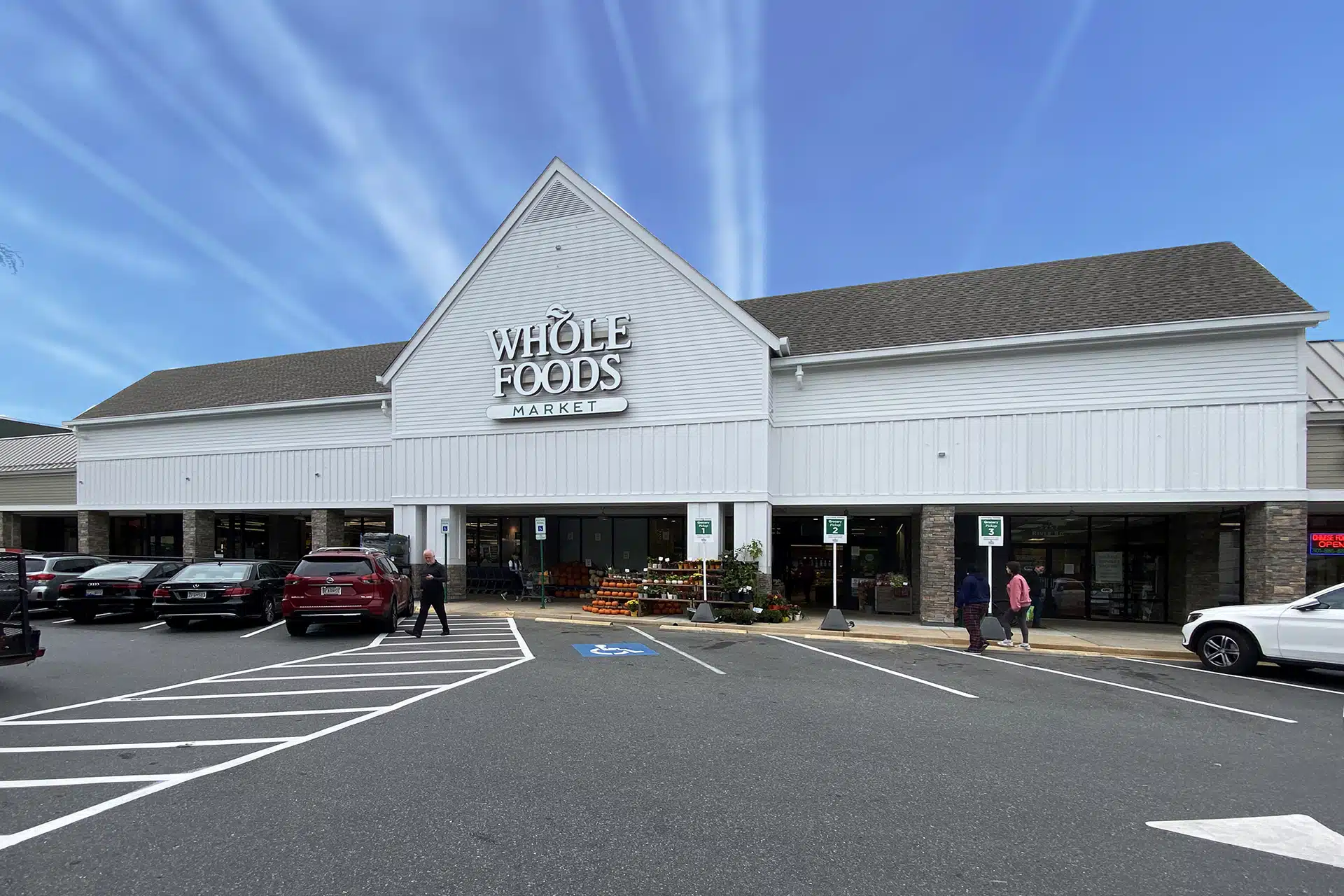 Kenwood Station | New Whole Foods Market Storefront
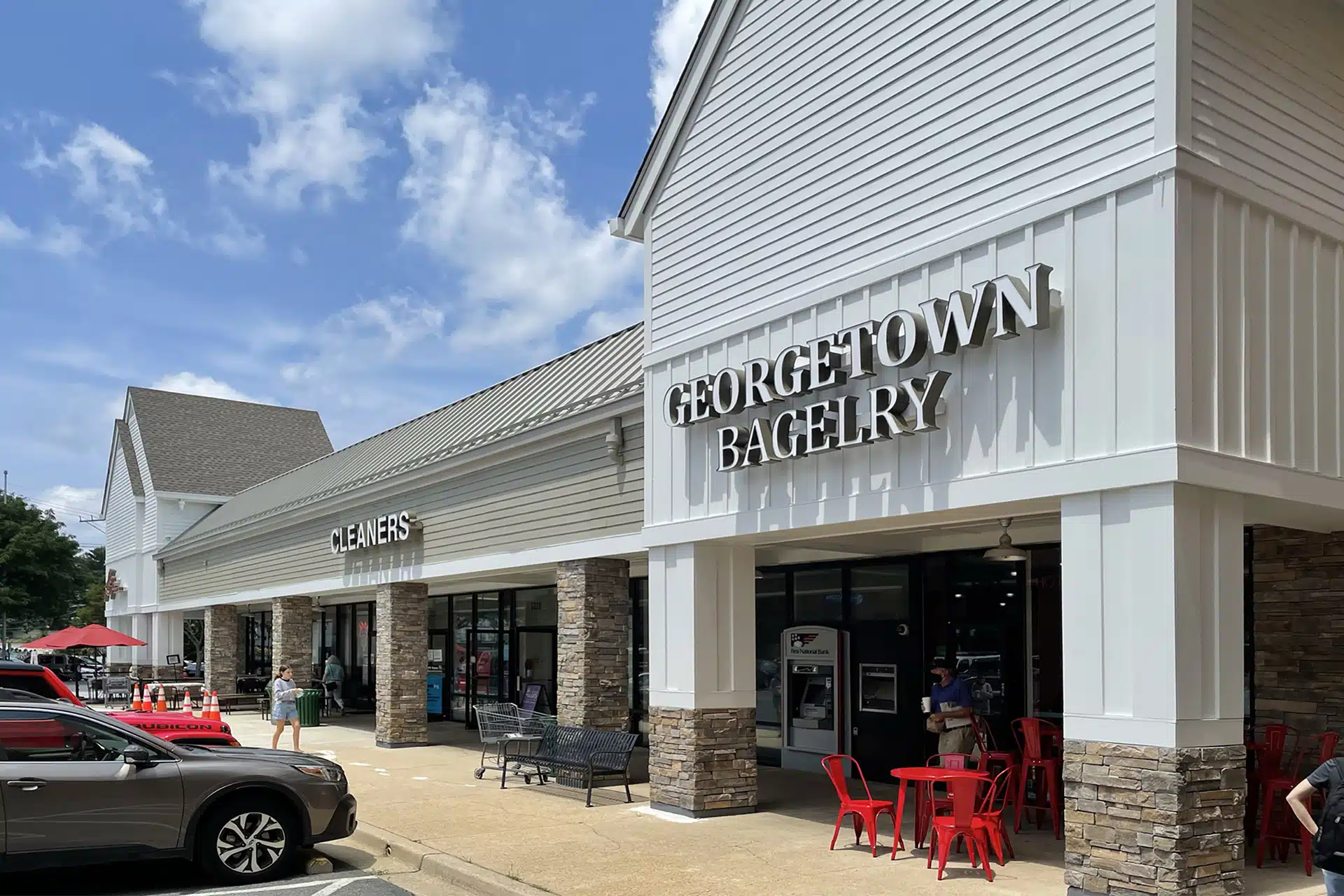 Kenwood Station | New Exterior Cladding
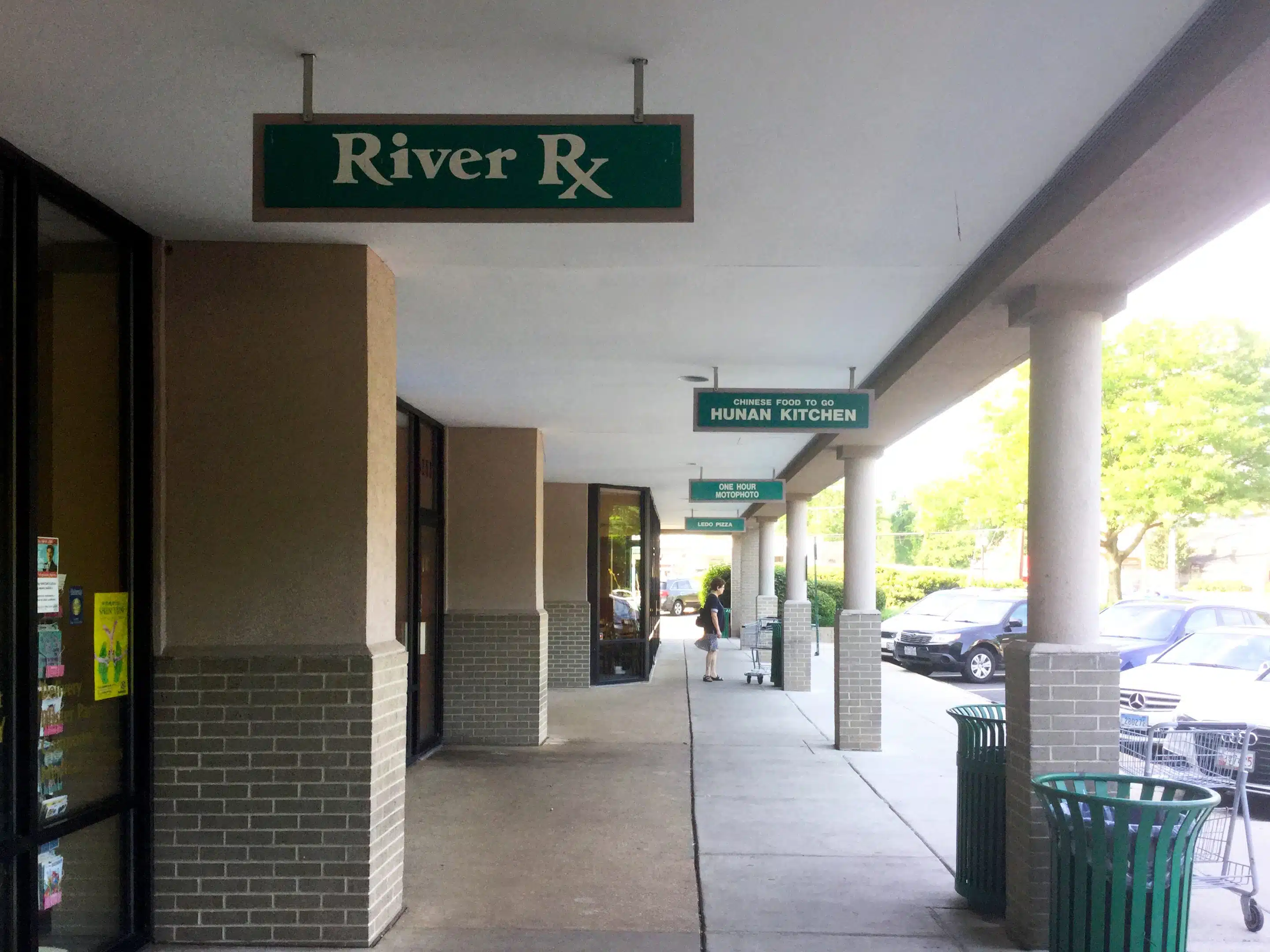 Kenwood Station | Arcade ‘Before’
 Kenwood Station | Arcade ‘After’