ALLEN MUSHINSKY | A Legacy In Practice
There are many ways to measure an architect’s career. Buildings completed. Projects won. Clients served. Communities changed. For Allen Mushinsky, those measures tell only part of the story.
Allen founded MV+A in 1979 and built a practice recognized for retail, urban design, mixed-use and commercial architecture—work that helped turn grocery stores, neighborhood shopping centers and streets into places that contribute more to their communities. But he also built a way of practicing architecture: collaborative rather than individual; pragmatic without sacrificing design; entrepreneurial but grounded in relationships; and deeply invested in the people doing the work. That may be his most enduring contribution.
A Different Kind of Practice
Building a firm by first deciding what it should be.
After graduating from Oklahoma State, Allen returned to Washington and joined a DC firm while earning a master’s in urban planning at Catholic University at night and on weekends. Over nine years he rose from young architect to named partner, moving from master planning and FHA housing into large mixed-use developments such as Virginia Park Center and Circle Towers, where zoning and master planning became central to his work.
By 1979, he was ready for something different. He had developed strong ideas about how a practice should operate—and how it should treat its people. So he left and started over, without a single client or project prospect. His first job was helping a friend with a basement. “You do what you need to do,” he later recalled.
Shopping-center renovations introduced Allen to developers, and that work led to Giant Food. One successful relationship led to another, and the young firm earned a reputation for understanding a building type much of the profession considered decidedly ordinary.
Allen saw something different.
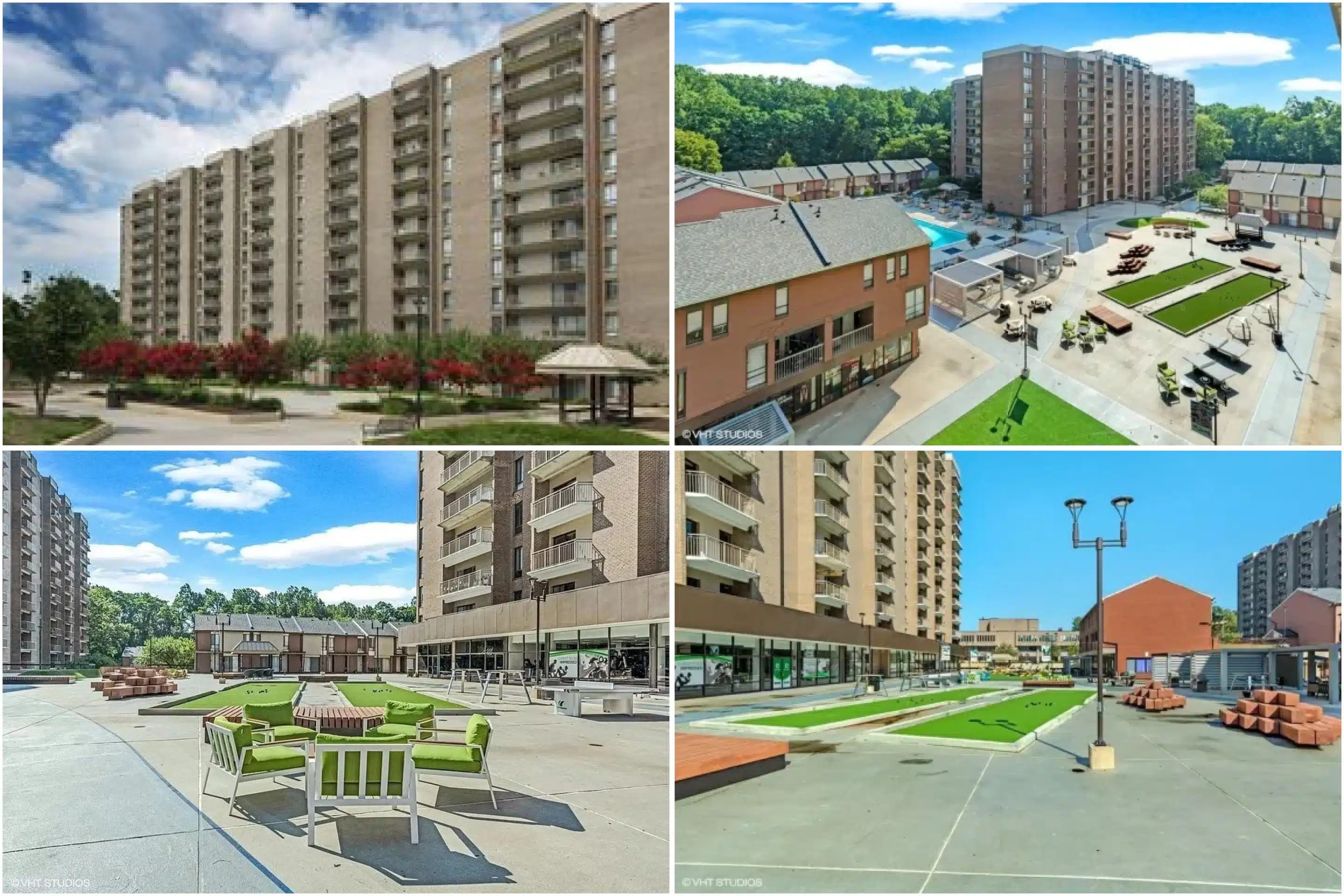
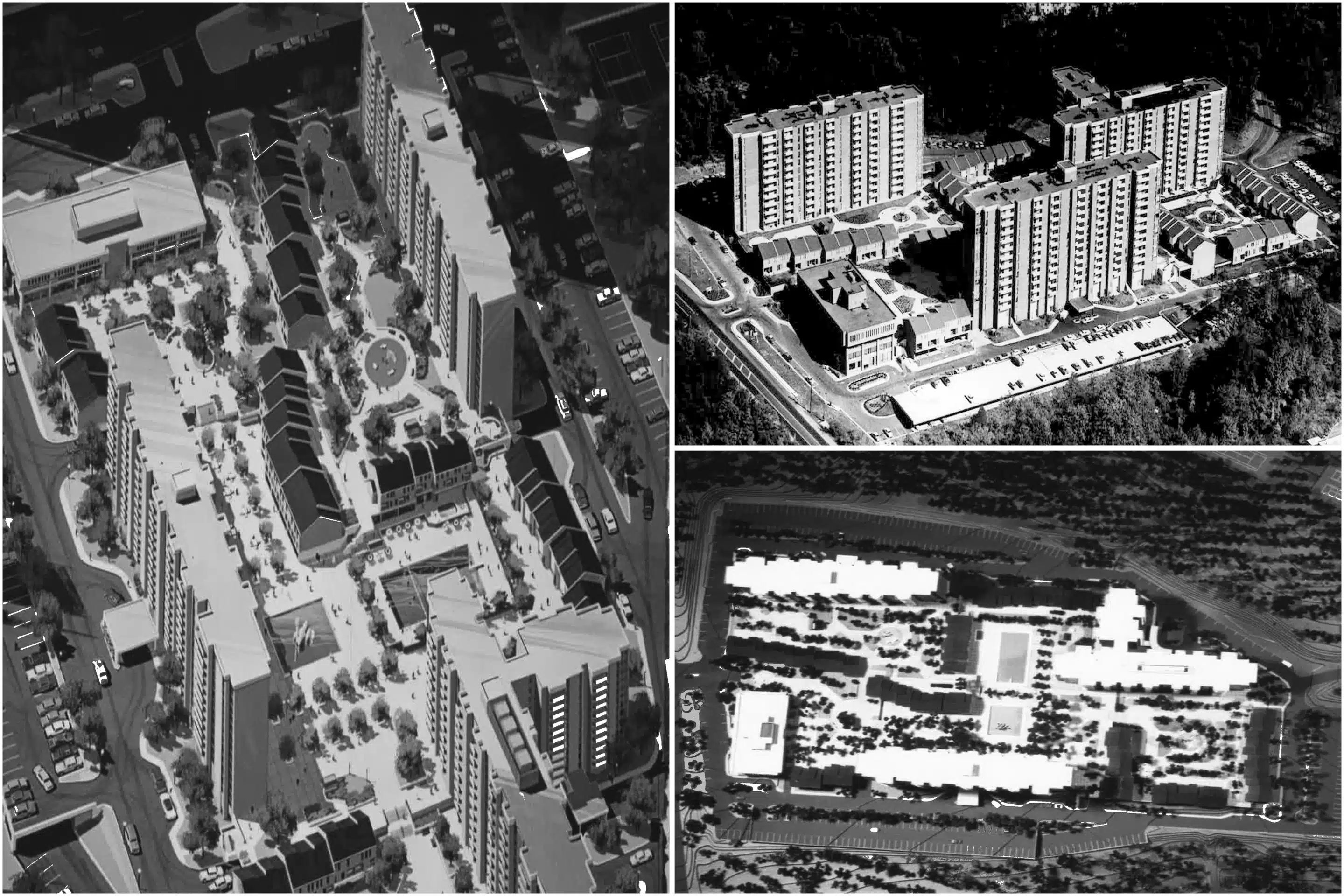 Circle Towers | Fairfax ,VA | Top Left + Bottom Right: Project model; Top Right: Aerial photo of completed project circa 1973. Below: Current-day courtyard photos
Making the Everyday Matter
Good architecture belongs in ordinary places, too.
Allen liked to tell of an early conversation with a Giant Food senior vice president, who explained that grocery stores needed to look like a “brown paper bag” because the margins justified nothing more. Allen spent much of his career proving otherwise.
As retail grew more competitive, he saw that architecture could become part of the value proposition. MV+A helped clients think beyond the building—about planning, open space, amenities, community acceptance and the experience of the people who would use these places. Part of the architect’s role, Allen said, was educating clients about how better architecture could attract people and improve a project.
Kingsview Village in Germantown, an early Giant-anchored center, became a breakthrough. Safeway soon approached the firm about projects facing neighborhood resistance. Stores were integrated differently into their sites, parking moved beneath or above buildings, and conventional suburban retail gave way to denser, more urban and eventually mixed-use solutions. The building type may have been utilitarian. Allen never believed the architecture had to be.
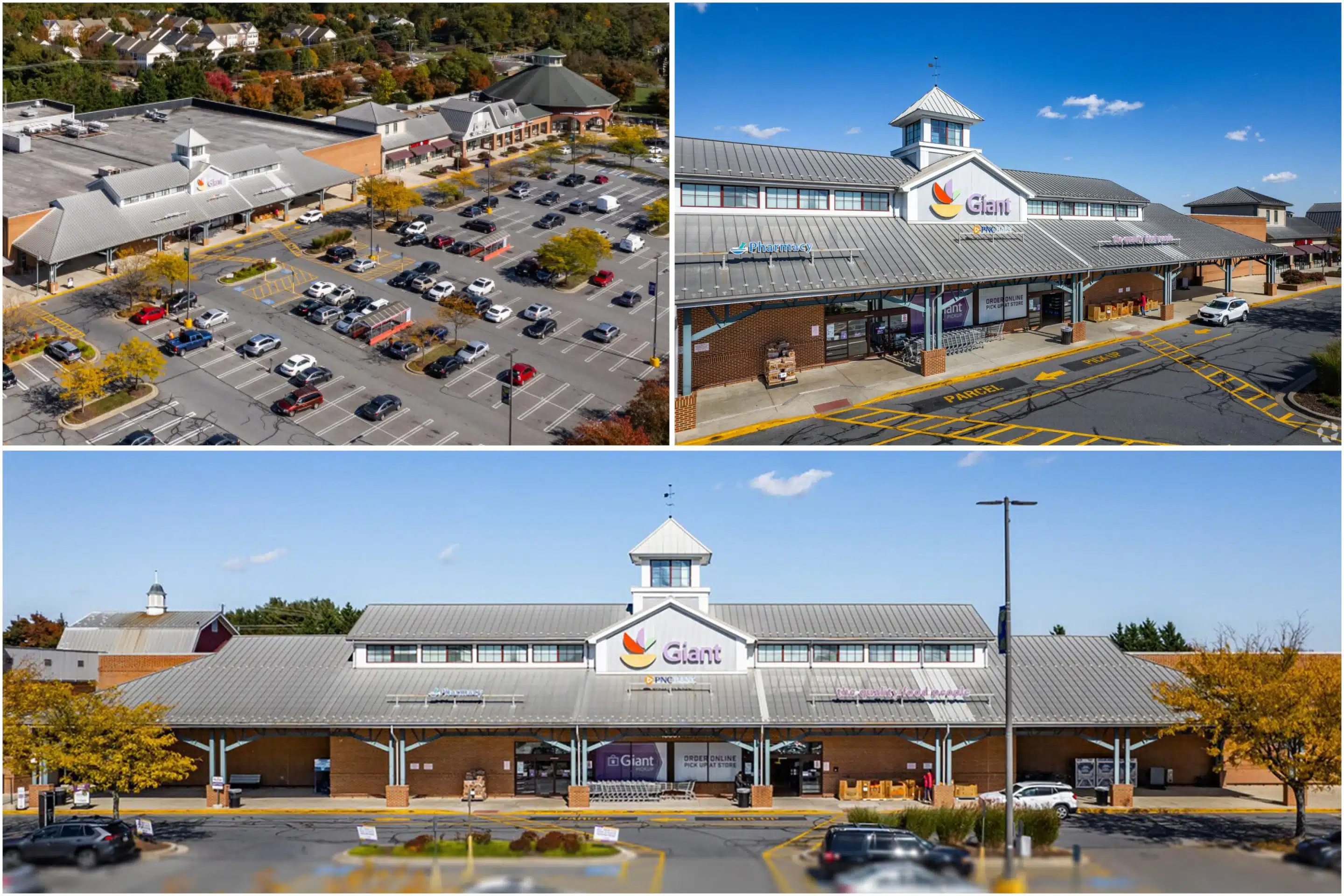 Kingsview Village Shopping Center | Germantown, MD
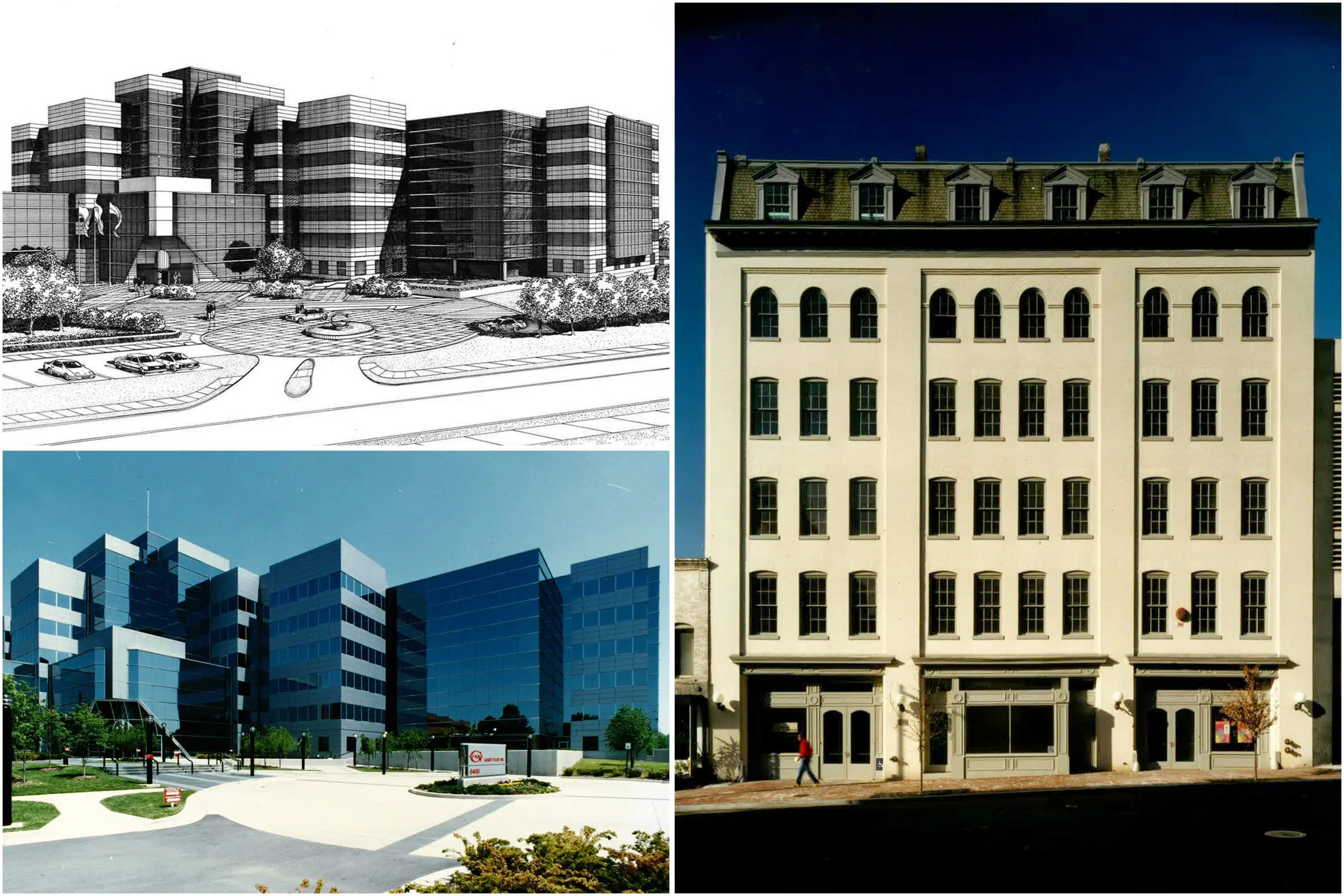 Left: Giant Food HQ | Landover, MD. Right: Historic preservation of 410 8th St, NW | Washington, DC
More Than a Building
Architecture as an act of listening.
Few projects capture Allen’s approach better than Tivoli Square, the redevelopment of an entire block around Washington’s historic Tivoli Theatre, which occupied him for roughly eight years. Approvals were difficult, preservation was complicated, community expectations were high, and Giant Food had to work within an urban mixed-use development unlike the grocery centers of the era.
The project was also personal: Allen had gone to the Tivoli as a child. He remembered it as an education in preservation, community engagement and especially teamwork—developers, architects, consultants, retailers, preservationists and neighbors finding a solution together. No single person could have delivered it.
For Allen, collaboration wasn’t a management strategy. It was architecture.
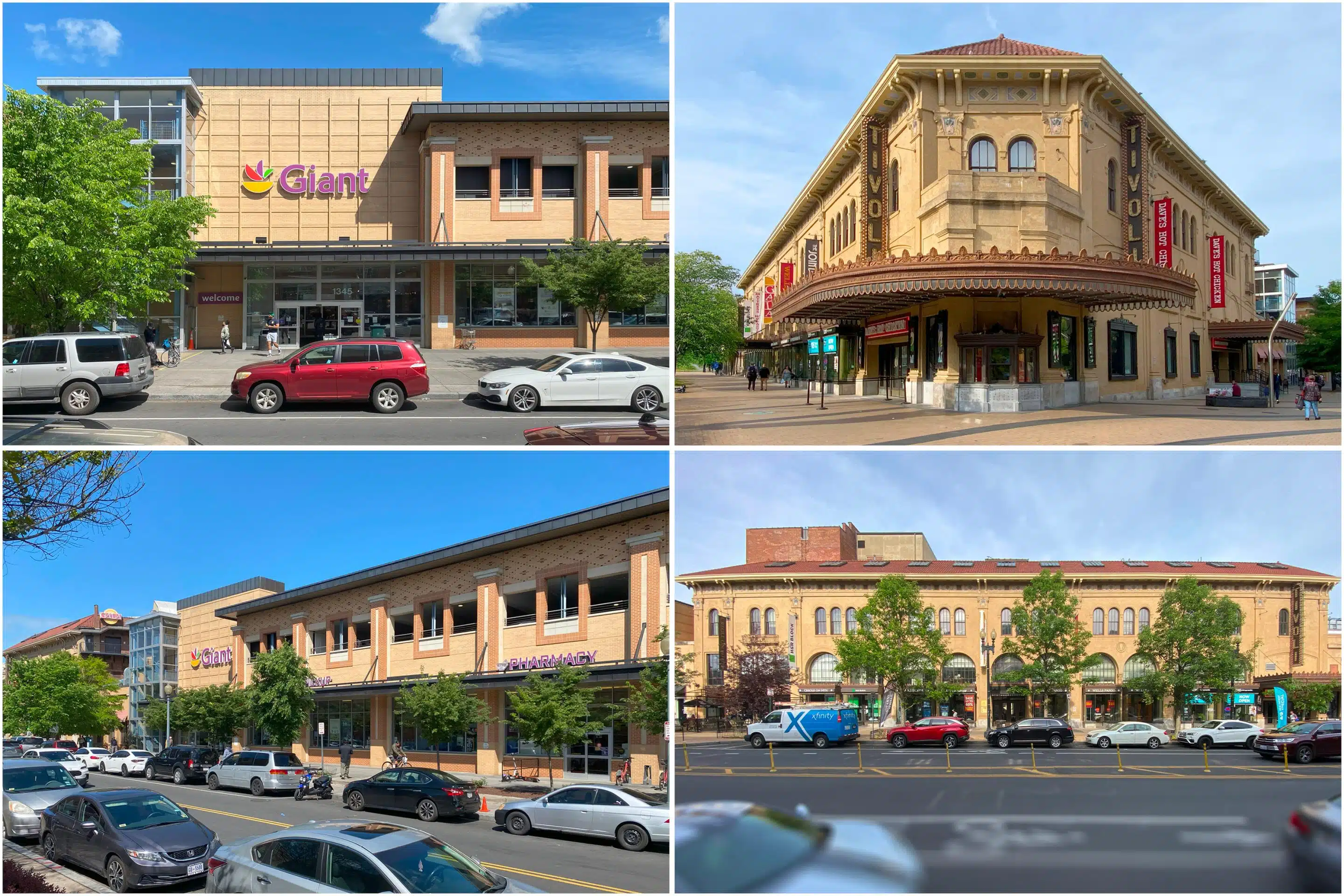 Tivoli Square Giant + Gala Theater | Washington, DC
Relationships Build the Practice
The opportunity was rarely just the project in front of him.
Allen understood that architecture is a relationship business. Retail relationships led to larger developments, and Whole Foods became especially important as developers sought the grocer as an anchor for urban and mixed-use projects. Allen recalled Whole Foods referring developers to MV+A to test whether a location could work—consultations that sometimes became the opportunity to design the larger project.
Expertise created trust. Trust created relationships. Relationships created opportunities to do more. Over time the firm grew from individual stores into master planning, entitlement, mixed-use, multifamily and complex urban development—not by chasing markets, but by doing good work and earning the next problem to solve.
Those relationships extended to consultants. Some who had worked with Allen before he founded MV+A followed him to the new firm and stood by it through difficult periods. Asked late in his career what advice he would leave the firm, he was characteristically direct: “Take care of your consultants, and they will take care of you.”
Architecture is a Team Sport
The firm was never supposed to be about one person.
When Brian Szymanski sat down with Allen in 2023 and asked what he missed most about practicing architecture, the answer wasn’t a project, designing or running the firm. It was working with the teams—learning something from staff every time, and hoping they learned something from him in return.
“Architecture is not one person doing a design. It is always about collaboration.”
Allen’s measure of success wasn’t his own authorship. It was an organization where others could contribute, learn, take on responsibility and eventually lead.
The Firm He Left Behind
A founder’s legacy is what continues without him.
By that 2023 conversation, Allen had retired and MV+A had changed—new people, new technology, a practice reaching well beyond the one he ran. He was pleased. He had hoped the firm would move on and do well, and that good people would have the chance to do what they had been educated to do and enjoy it. He believed that had happened, and he admired the firm’s diversity, openness and willingness to evolve.
A successful succession doesn’t preserve a practice exactly as its founder left it. It lets the practice change without losing the values that made it worth continuing. Today MV+A works at scales, in markets and with technologies Allen could hardly have anticipated in 1979. Yet its DNA remains recognizable: a willingness to pursue opportunity, a belief that design and pragmatism are complementary, respect for clients, consultants and collaborators, and a conviction that architecture is a collective endeavor.
Allen’s buildings remain. So does something harder to photograph: A practice. A culture. And generations of people who learned from him—and from one another—how to carry the work forward.
 MV+A and Whole Foods Market | A 30+ Year Legacy
Remembering Allen
“When I think about Allen, I think less about the buildings we designed together and more about the years we spent building a practice and a friendship. He believed deeply in the value of good architecture, but equally in the importance of the people and relationships behind it. I will always be grateful for the years we worked together, for his friendship, and for the remarkable legacy he leaves behind.”
Jim Voelzke | FAIA
“It was a pleasure getting the opportunity to work with and learn from Allen over the years. I owe so much to Allen and what he created. I am truly honored to continue the legacy that he started, and continue his vision for MV+A Architects.”
Brian Szymanski | AIA, AICP